Guided missiles and anti-armour / anti-armor systems
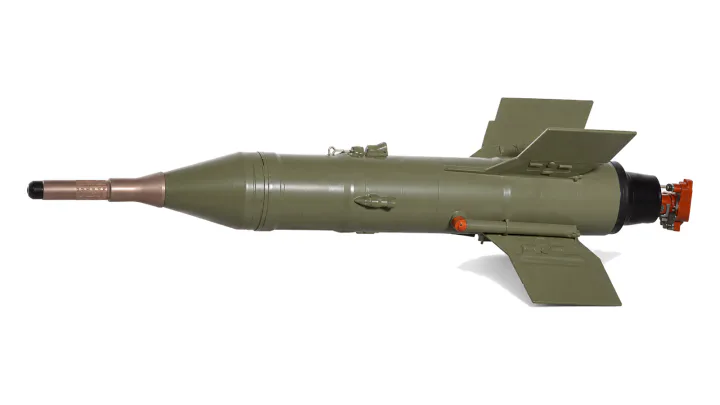
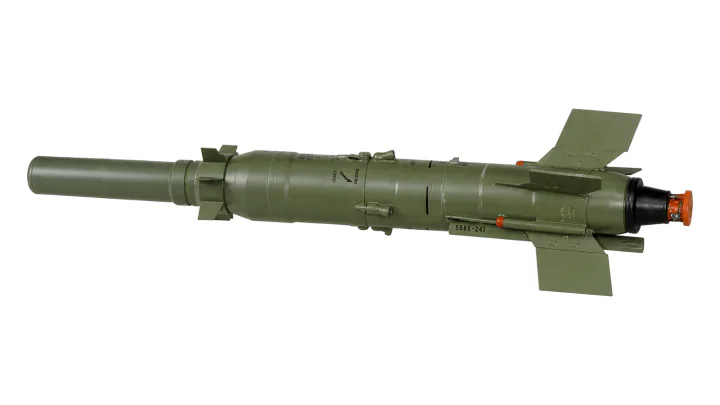
Nine records cover the guided members of this domain. The MALJUTKA and MALYUTKA line runs from the wire-guided 9M14P1 and the extended nose probe 9M14P1B1 to the 2M with enhanced penetration, the tandem 2T and the thermobaric 2F, each quoted between 2800 and 3000 m. The fire-and-forget entries are the shoulder-fired POS 145, whose head is a 145/50 mm tandem shaped charge of 6.4 kg, and the NOVA system, which lists a 145 mm shaped charge of 6.4 kg among its warhead options. ALAS is a turbojet-sustained missile of 175 mm calibre, and one further record describes a 128 mm laser-guided rocket.
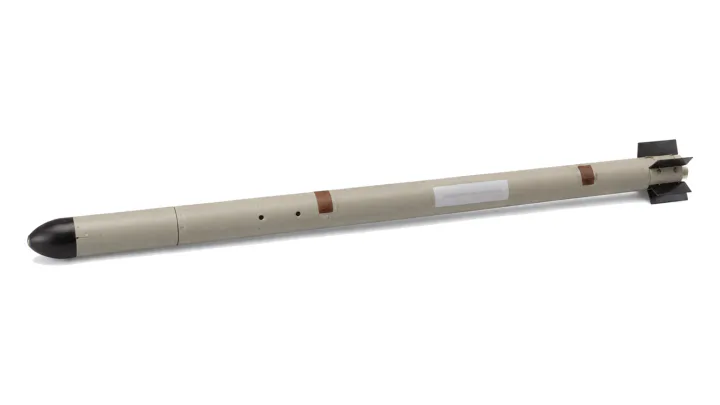
Laser-guided rocket launched from land, naval, helicopter or aircraft platforms against ground targets beyond visual range, using inertial and/or GPS mid-course navigation and a coded laser seeker with a 20 kg HE blast-fragmentation warhead.
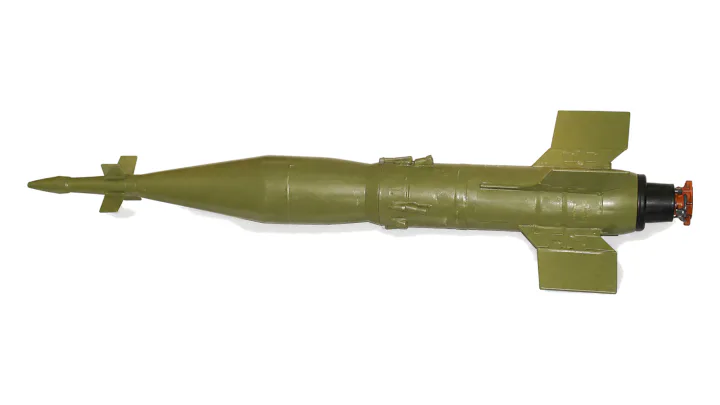
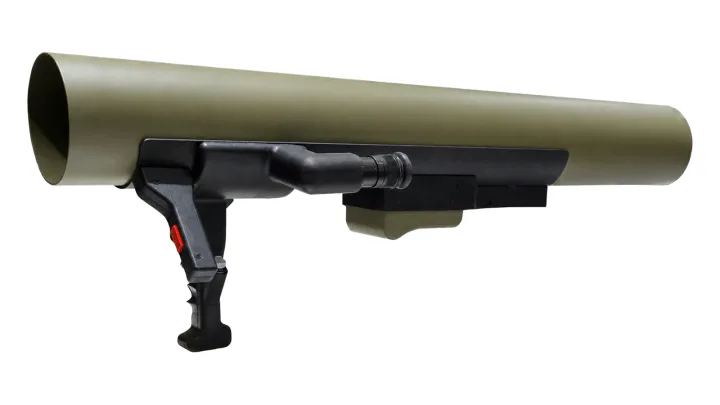
A light shoulder-fired fire-and-forget anti-tank guided missile with a 145/50 mm tandem shaped-charge warhead penetrating over 1000 mm of armour, effective from 0.4 to 2.5 km, weighing 15 kg alone or 17 kg in its container with a 5 kg command launch unit.
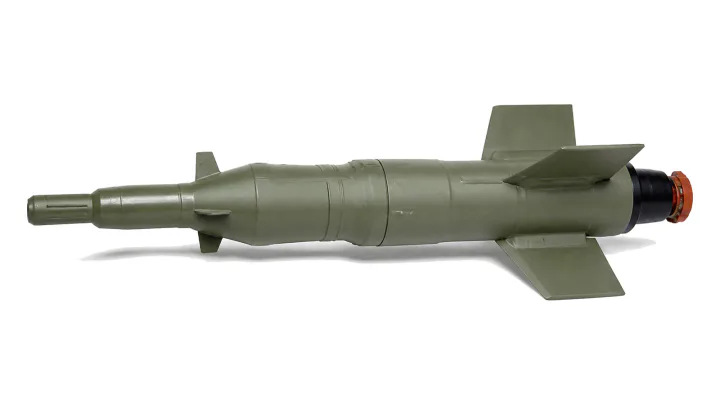
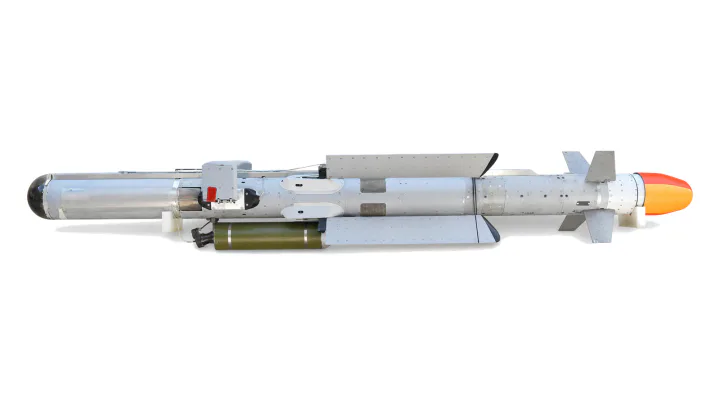
A turbojet-sustained guided missile launched from a container by a solid propellant booster, using INS/GNSS mid-course guidance and TV CCD or IIR terminal guidance with contrast/correlation auto tracking, and carrying a tandem-charge HEAT warhead with additional blast fragmentation; it is controlled over a single-mode optical fibre link or an optional two-way C-band radio link.
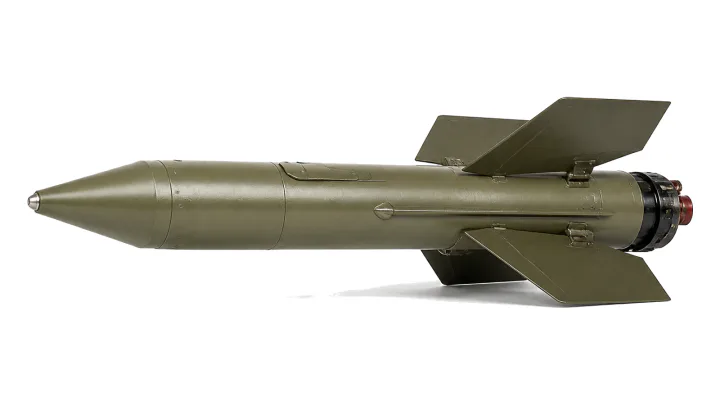
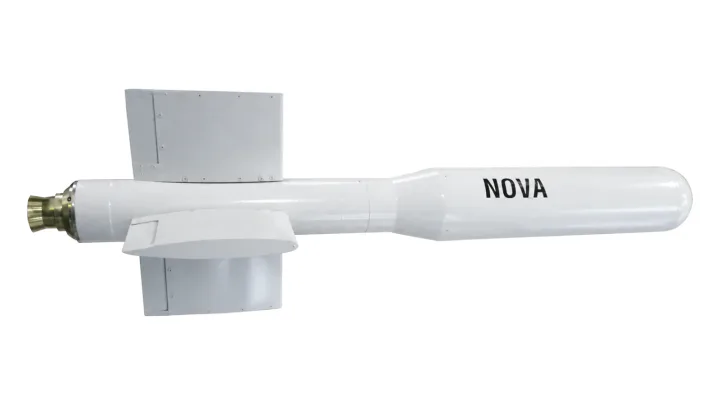
Portable fire-and-forget light attack missile system with 0.5 to 8+ km range, INS mid-course guidance and radio-linked TV/IIR homing, supplied as missile/container, launcher and ground control station and offered with 145 mm or 120 mm shaped-charge or 7 kg free-ball proximity-fuzed warheads.
Maximum range
8+ km
Average velocity
200 m/s
Minimum range
0.5 km
Specifications →
How guided munitions are specified in tender documents
Every record names the calibre or missile diameter, the launch mass, the warhead type and a range figure, with penetration or effect quoted where the source gives it. Missile length appears on the five MALJUTKA and MALYUTKA entries, on ALAS and on the 128 mm rocket, while POS 145 and NOVA give container dimensions instead. Minimum range is published on 9M14P1B1, POS 145, NOVA and ALAS. Mid-course and terminal guidance are both described on NOVA, ALAS and the 128 mm rocket; the two MALJUTKA records give wire-guided command with optical tracking, POS 145 a terminal homing head, and the MALYUTKA 2M, 2T and 2F records carry no guidance line. A speed figure — average, cruising or maximum — appears on 2M, 2T, 2F, NOVA, ALAS and the 128 mm rocket. Several entries add hit probability, shelf life and operating, field and depot temperature ranges, and auxiliary equipment such as test sets and training simulators is listed where the source names it.
What changes from one missile to the next
Five records carry the MALJUTKA or MALYUTKA name, separated by the suffixes 9M14P1, 9M14P1B1, 2M, 2T and 2F, with launch mass from 11 to 13.8 kg and penetration from 460 to 800 mm. POS 145 lists a 145/50 mm tandem shaped charge of 6.4 kg and NOVA a 145 mm shaped charge of the same 6.4 kg; NOVA adds a 120 mm charge of 5.8 kg and a 7.0 kg free-ball option. ALAS is quoted at 73.10 kg launch mass and 25 km maximum effective range.
Questions about this equipment
Which guidance methods appear in this group?
Four are described. The MALJUTKA records use wire-guided command with optical tracking along the sighting line. POS 145 and NOVA use an uncooled IIR or TV homing head. ALAS combines INS/GNSS mid-course guidance with TV CCD or IIR terminal guidance. The 128 mm rocket uses inertial and/or GPS navigation with a coded laser seeker.
What ranges do the records publish?
The MALJUTKA and MALYUTKA entries state 2800 m or 3000 m. POS 145 is quoted from 0.4 to 2.5 km and NOVA from 0.5 to more than 8 km. ALAS gives 4 to 25 km. The 128 mm laser-guided rocket lists 15 km released from a helicopter and 28 km from an aircraft at 8000 m.