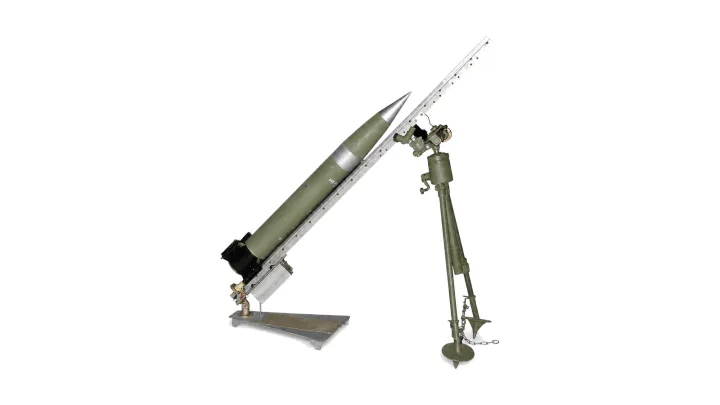
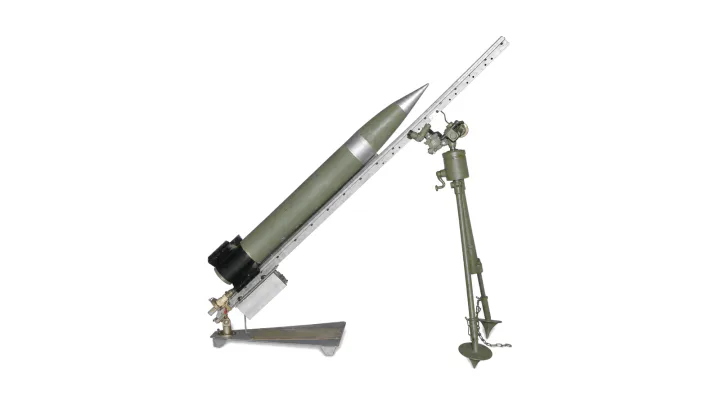
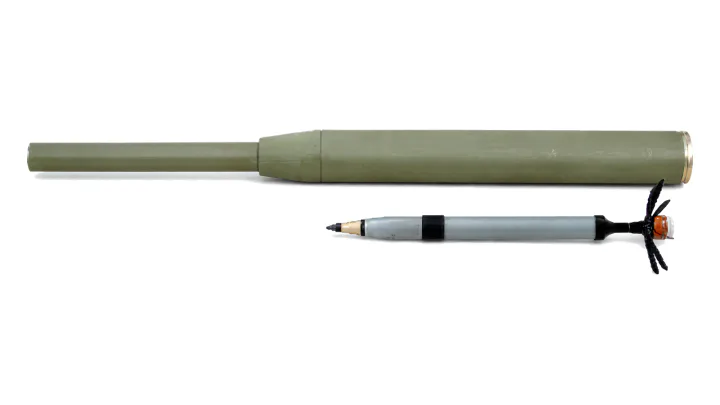
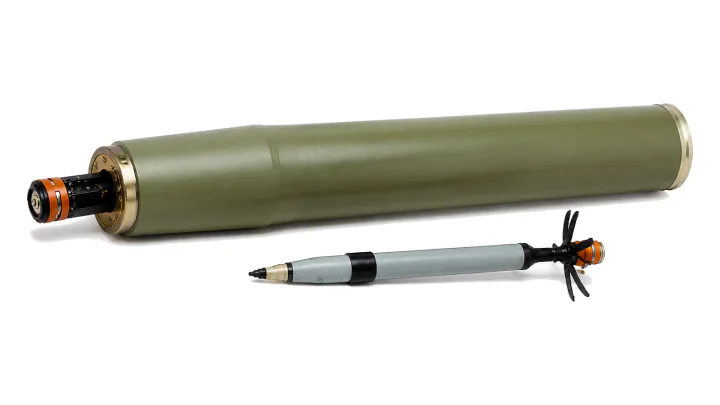
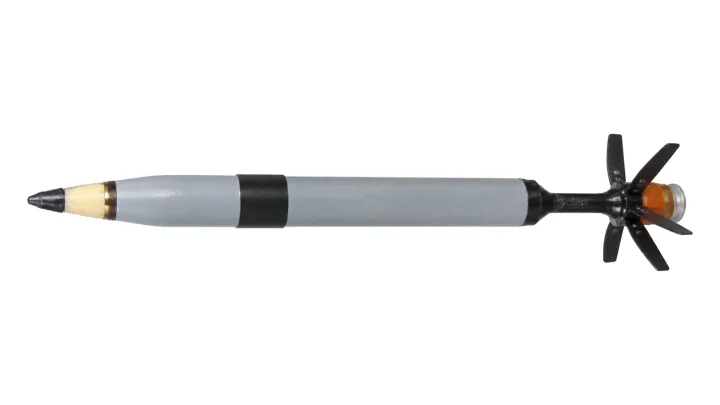
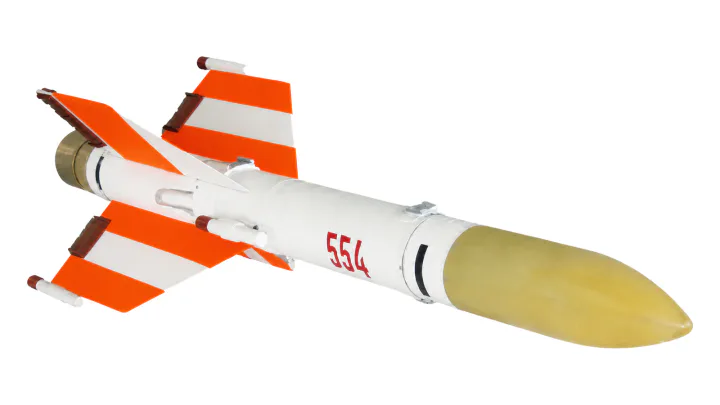
Six records cover training stores. QUICK ATS 128 Type A and Type B are 128 mm rocket targets flying an incoming and a departing ballistic trajectory for short-range air defence crews, each carrying tracers and modified IC-5 decoys. PRM-200 is an air-launched programmable target with self-contained guidance. The 128 mm OGANJ and PLAMEN practice rockets reproduce the outer design of the service rockets and hold an inserted barrel, and the 57 mm practice rocket with signal head is the round that barrel launches. None carries a combat warhead.
Air-launched programmable rocket target with self-contained guidance, used as a live-fire target for AD missiles, air-to-air missiles and radar-directed AA artillery.
Operating altitude range
300 m (+/-10%) to 7000 m (+/-10%)
Preprogrammed number of pitchings
2
Preprogrammed number of yawings
2
Specifications →
How training rockets are specified in tender documents
The two QUICK ATS 128 records give calibre, stabiliser span, length with tracer, rocket mass, mass of the ignition charge, the number of tracers and decoys, temperature range and the trajectory type. PRM-200 is specified instead by operating altitude, the number of preset pitch and yaw manoeuvres, target range at two launch altitudes, radar signature in three bands, infrared radiation level and flare fit. The 128 mm OGANJ and PLAMEN practice records describe the outer design they copy, the function of the inserted barrel, the training range and the launcher they are fired from, and the 57 mm signal-head round adds rocket mass, fuze and the mass of its signalling compound.
Target and practice designations compared
QUICK ATS 128 splits into Type A, quoted at 33.6 kg with six tracers, and Type B at 35 kg with four; both list a 9.7 kg ignition charge and four modified IC-5 decoys. PRM-200 stands alone. The two 128 mm practice rockets take the names of the service rockets they copy, and the 57 mm signal-head round is quoted at 3.7 kg with the UTI-2P3 fuze.
Questions about this equipment
What do the air target simulators represent?
They are unguided 128 mm rockets flown as targets to train short-range air defence system operators. Type A follows an incoming ballistic trajectory and Type B a departing one, which is the difference the two records set out alongside their tracer count and mass.
How far do these training rockets reach?
The 128 mm OGANJ and PLAMEN practice rockets and the 57 mm signal-head round are all quoted for short-distance targets up to 3500 m. PRM-200 is different in scale: 22 km when launched at 300 m altitude and 48 km when launched at 7000 m.