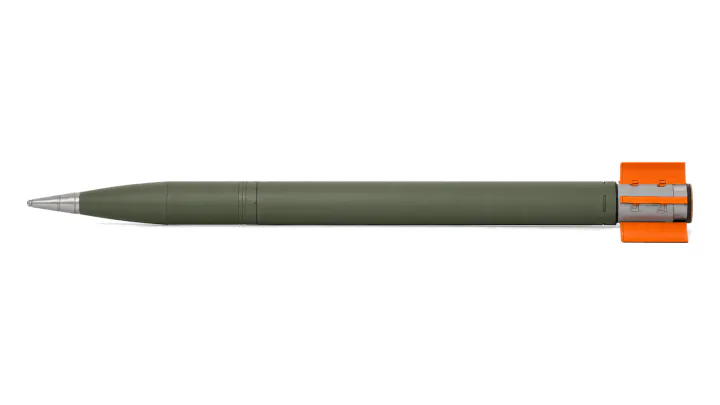
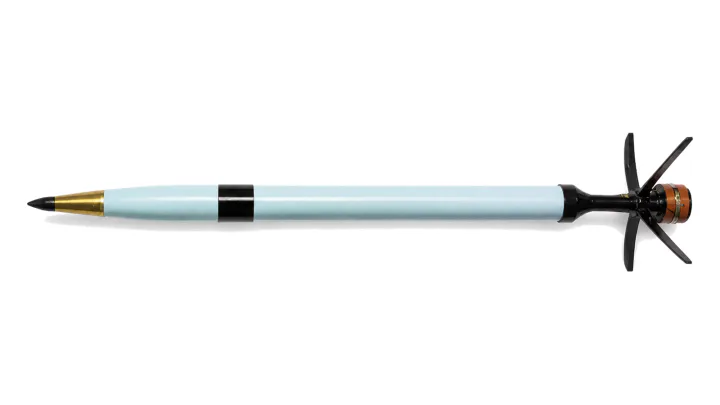
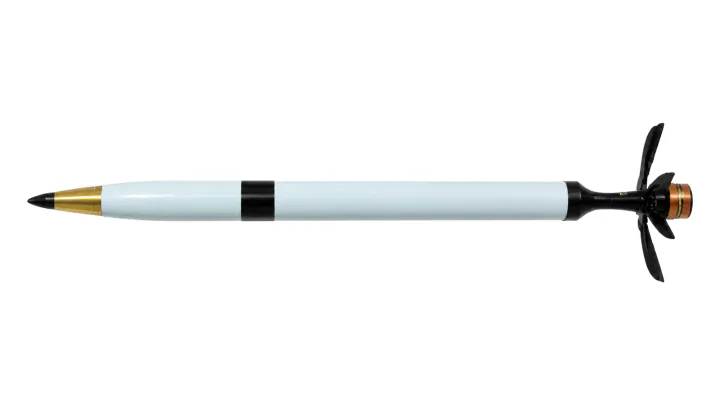
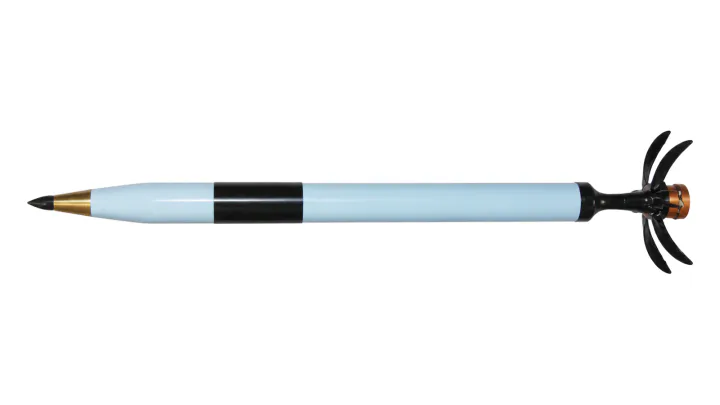
Unguided aircraft rockets across three calibres / calibers
Nine line items cover the unguided rockets of this group, in 57 mm, 80 mm and 128 mm. The 57 mm family runs from the high-explosive BR-1-57 and the hollow-charge BR-2-57 through the universal BR-20-57 P1, the illuminating M17, and the inert BR-1-57 V, BR-2-57 V and BR-20-57 V practice versions. Above them sit the 80 mm S-8 KOM and the 128 mm BR-VZ-128-M15. All are unguided, and launcher detail is sparse: the BR-1-57 names tube launchers with open rear end in an L-57 honeycomb pod, and the M17 is fired from 57 mm straight and helical rocket launchers. Warhead type and mass differ from model to model, four of the nine name their fuze, and range or flight-time figures appear where the source publishes them.
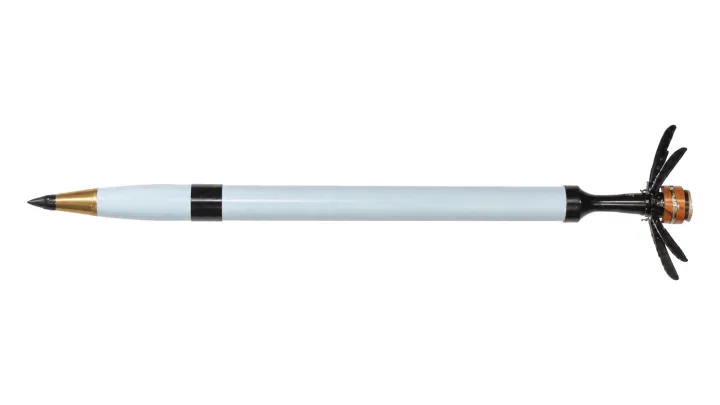
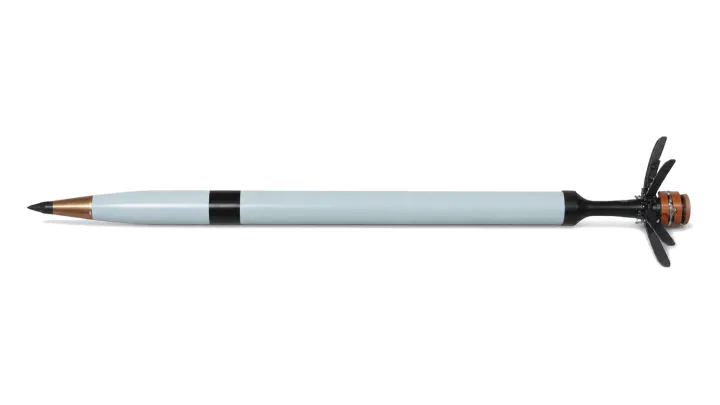
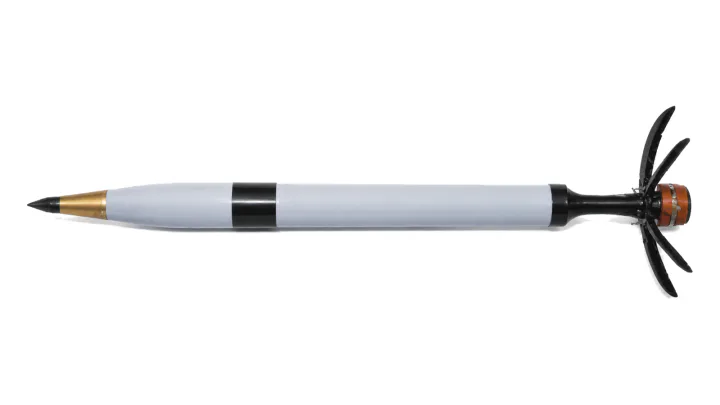
An unguided air-to-surface rocket with a dual-purpose HE/HEAT warhead intended for ground targets including tanks, self-propelled artillery, armoured vehicles and personnel carriers, launch ramps, radar stations, parked aircraft and helicopters, ammunition and fuel stores, and enemy personnel.
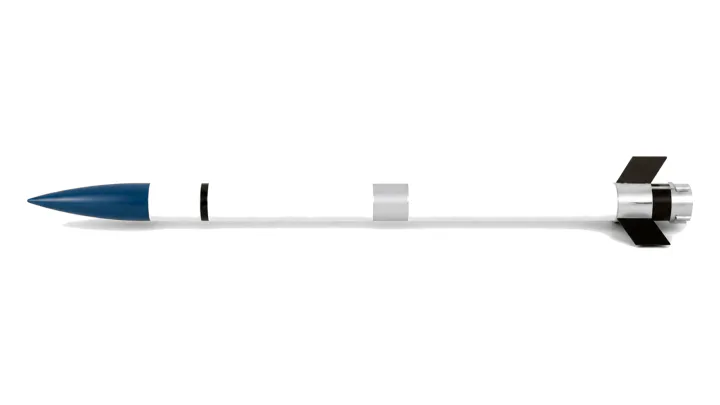
A 57 mm electrically ignited illuminating rocket made up of a parachute and flare section, a time delay unit and a rocket motor, fired from 57 mm straight and helical rocket launchers to illuminate the field during combat operations and for surveillance and identification of vessels during coastal patrol.
An 80 mm unguided aviation rocket with a hollow-charge fragmentation warhead of impact effect, used from aircraft and helicopters against armoured ground targets such as tanks, self-propelled guns and armoured personnel carriers, unarmoured targets such as launchers, radar stations and parked aircraft, and enemy forces.
Caliber
80 mm
Length
1566 mm
Weight with a fuze
11.5 kg
Specifications →
What the tender file lists for each rocket
Calibre is the one figure every entry states. The six service rockets give the mass of the assembled rocket, and five of them add its length and a velocity figure; the mass of the explosive charge and a fuze designation — UTI-1 or UTI-2 — appear on the three 57 mm BR service rockets. The three inert practice versions state only that mass, centre of gravity and shape are matched to the service rocket. Packaging appears where the source publishes it: eight rockets per wooden case for the BR-20-57 P1 and twelve per case at 67 kg gross for the practice versions, with a five-year warranty period on those same four records.
Designation families across the nine records
Four designation families appear. The BR series covers the 57 mm rockets, with the letter V marking the inert practice version of a service round. M17 belongs to the illuminating rocket, S-8 KOM to the 80 mm model and BR-VZ-128-M15 to the 128 mm one. Assembled mass runs from 3.64 kg on the BR-2-57 to 52.7 kg on the BR-VZ-128-M15, and the named fuzes include UTI-1, UTI-2 and a mechanical impact type.
Questions about this equipment
Which calibres does this group cover?
Three: 57 mm, 80 mm and 128 mm. The 57 mm rockets form the larger part of the group, while the 80 mm S-8 KOM and the 128 mm BR-VZ-128-M15 are listed as single models. Grouping follows role rather than calibre, so the three sit together on one page.
Are the practice rockets listed separately?
Yes. BR-1-57 V, BR-2-57 V and BR-20-57 V each hold their own record. Their warheads and fuzes are inert metal, and the source states that mass, centre of gravity and shape are matched to the service rocket so that the trajectories are identical.