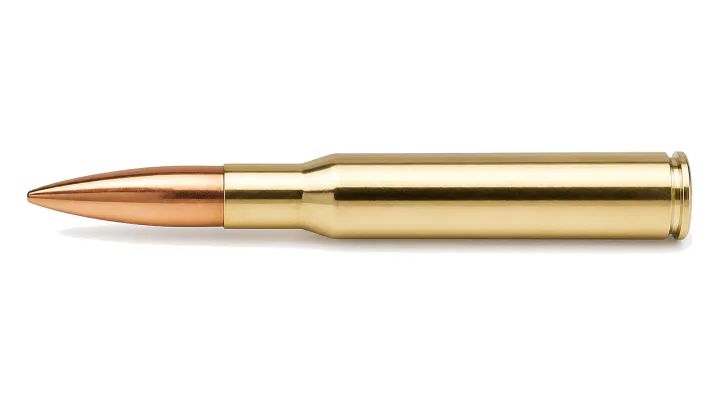
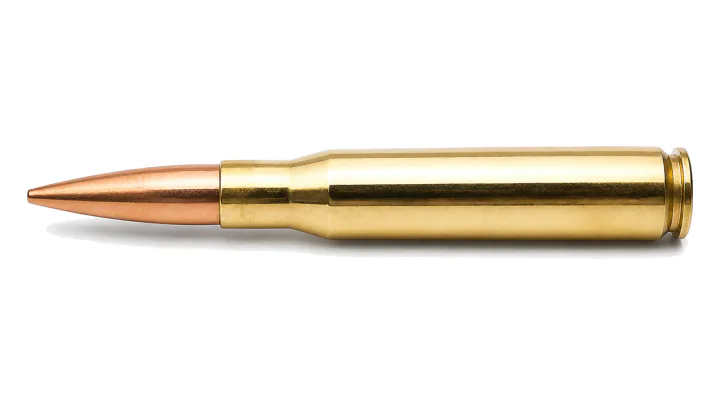
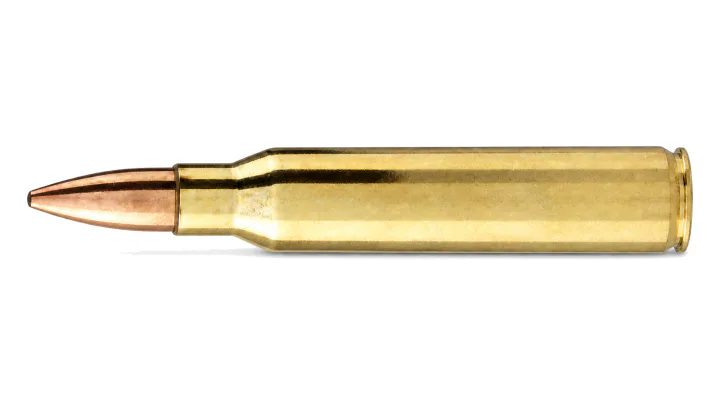
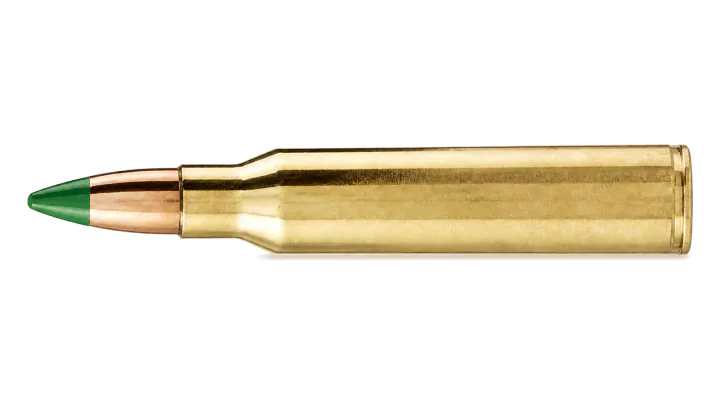
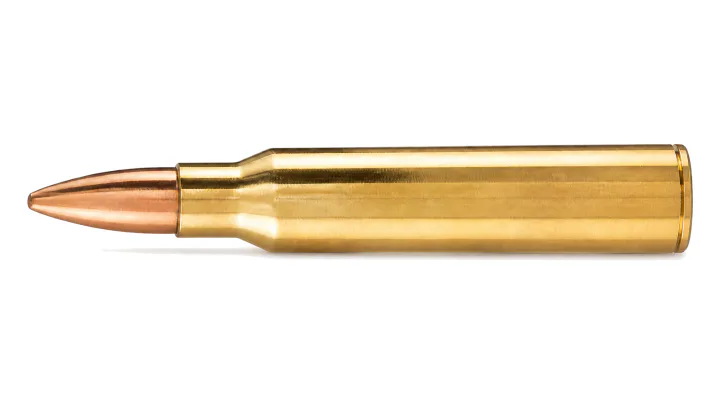
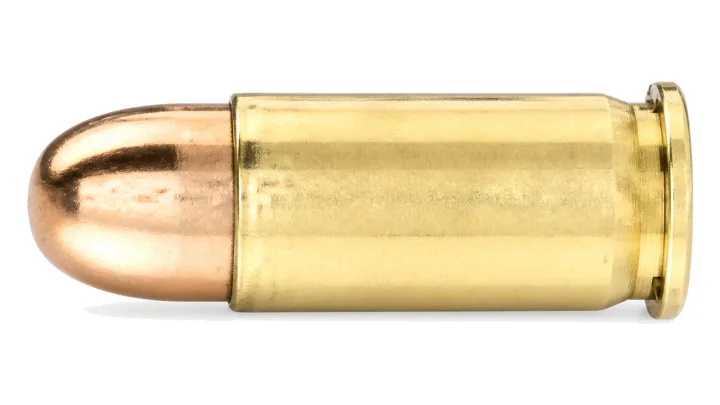
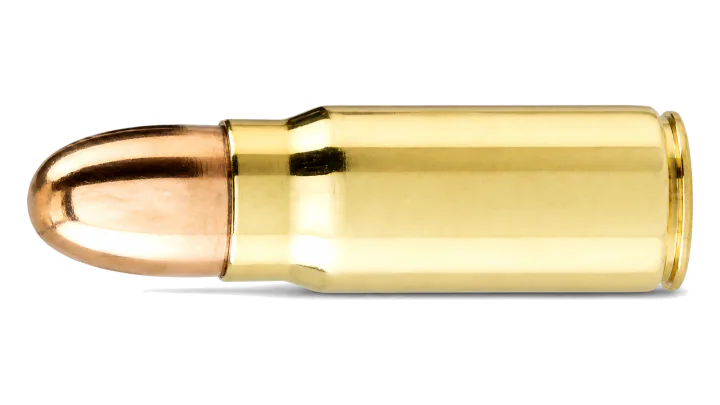
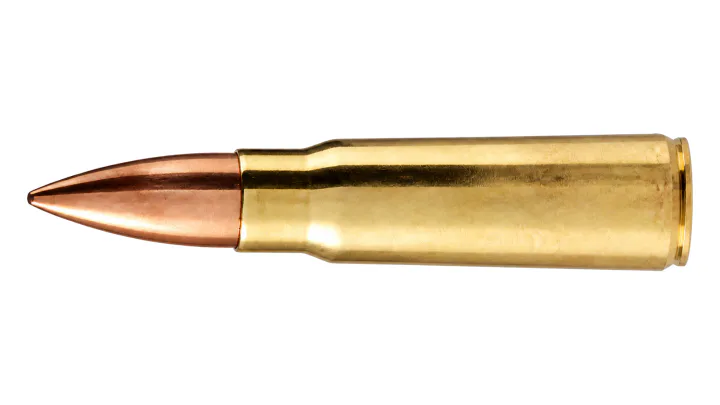
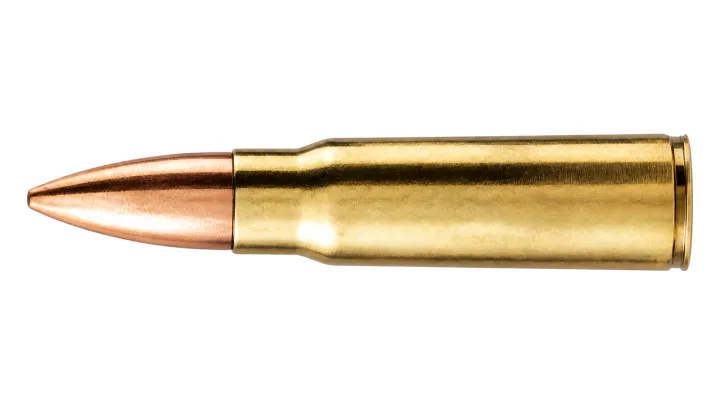
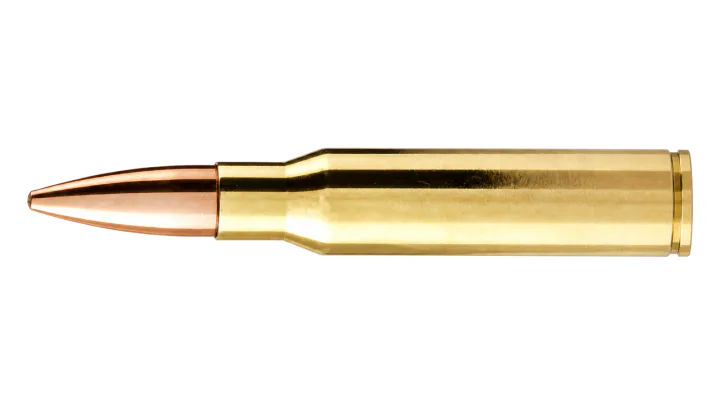
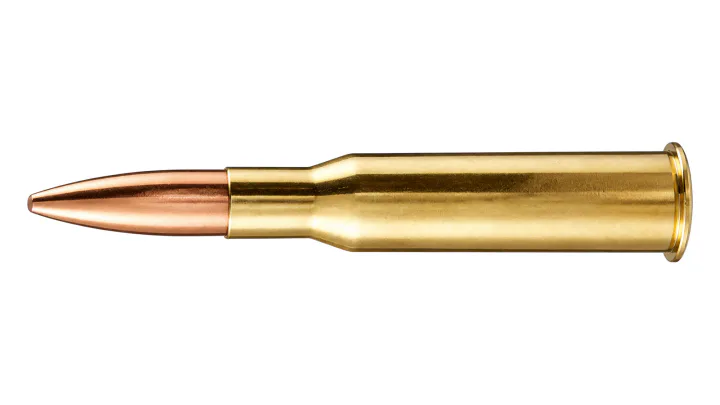
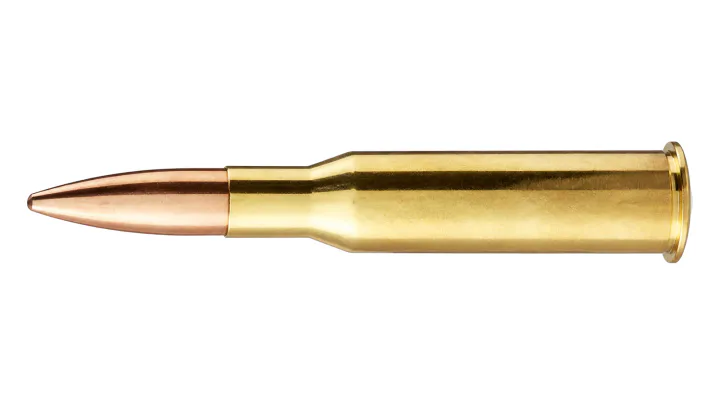
Ball ammunition for pistol and rifle calibres / calibers
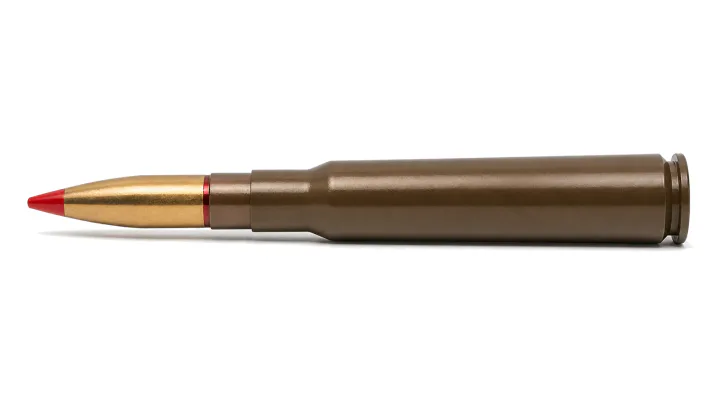
The ball cartridge is the general purpose round of this register: an inert jacketed bullet with no incendiary or tracer filling. The group holds 26 line items, from the 6.35 mm and 9 x 17 mm pistol cartridges through the 5.56 x 45 mm M193, M855 and SS 109 rifle families, the 7.62 x 39 mm M43 and M67, the 7.62 x 51 mm M80, the 7.62 x 54R mm M30 (J) and M87, up to the 12.7 x 99 mm M33 and the 12.7 x 108 mm round. Every entry states a bullet mass, a propellant type and a packing configuration.
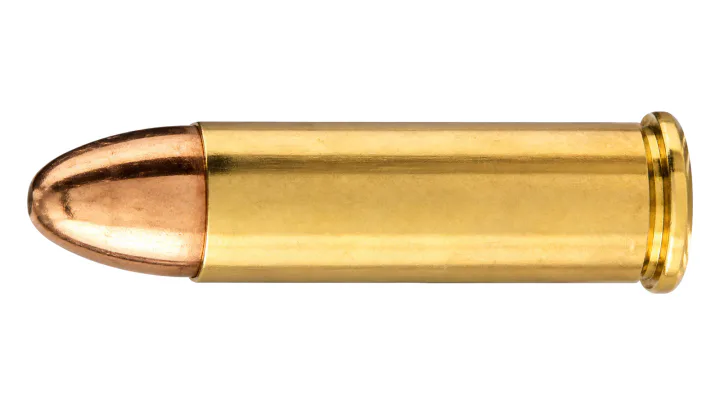
Revolver cartridge with a lead and antimony core bullet of 10.2 g (158 gr) and an average velocity of 270 plus or minus 15 m/s, made to C.I.P. and SAAMI standards.
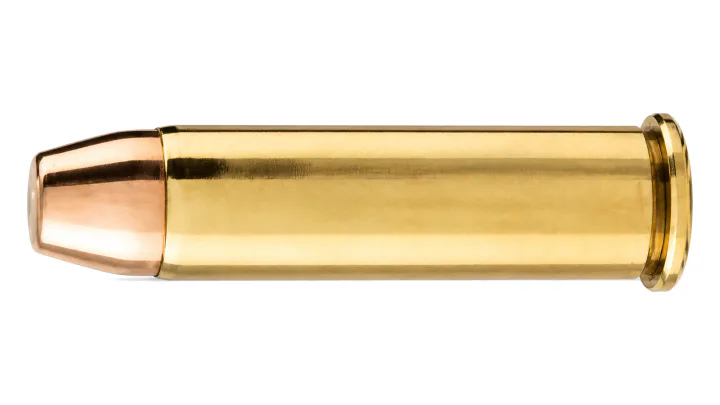
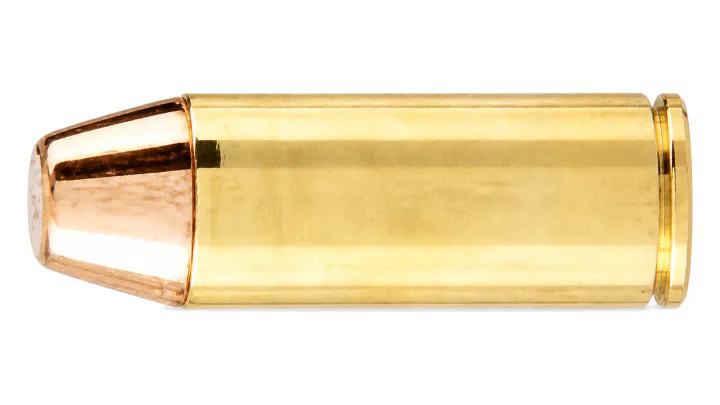
A .44 Magnum revolver cartridge with a lead/antimony core bullet, offered as a 11.7 g full profile jacketed loading and a 15.5 g semi-jacketed hollow point loading, both to C.I.P. and SAAMI standards.
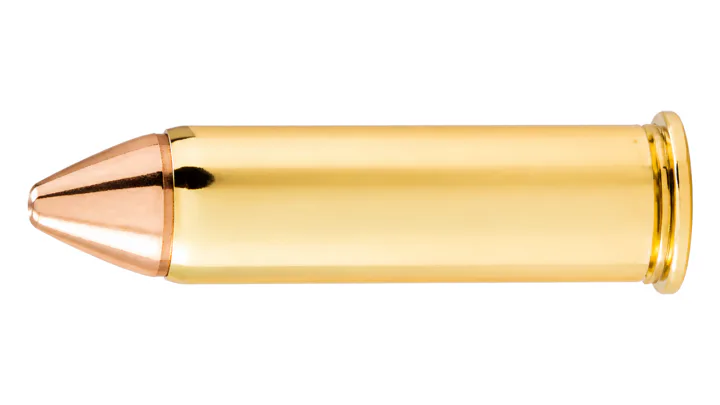
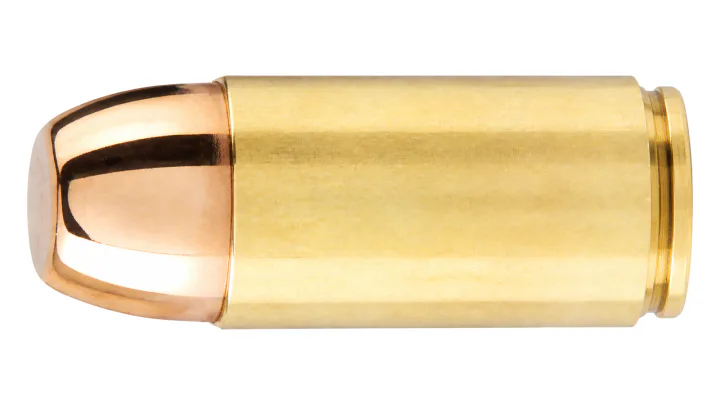
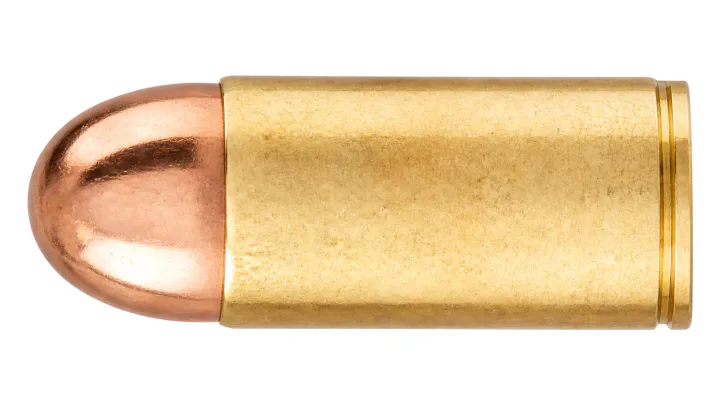
A 10 mm Auto pistol cartridge with a full profile jacketed lead/antimony core bullet of 11 g, made to CIP and SAAMI standards for 10 mm Auto calibre weapons.
Average velocity
V12.5 = 330 ± 25 m/s
Bullet mass
11 g / 170 gr
Caliber and type
10 mm Auto pistol cartridge with lead/antimony core bullet
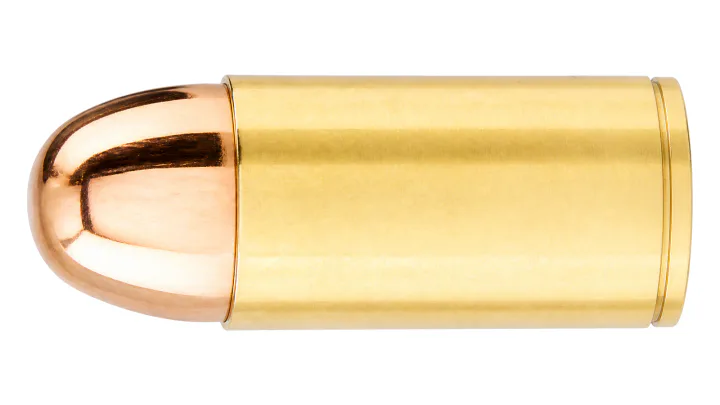
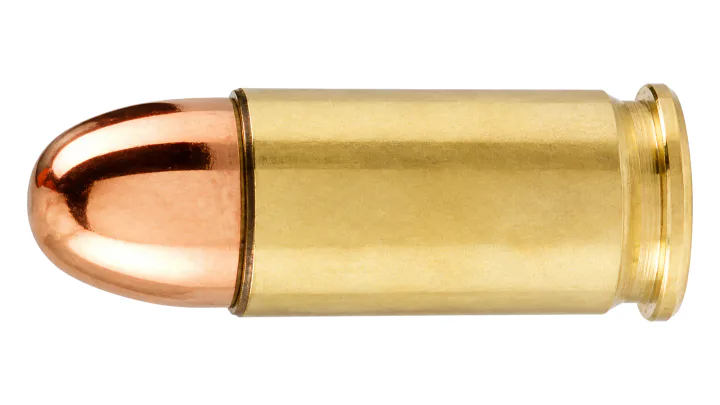
A 7.65 mm Browning (.32 Auto) pistol cartridge with a lead/antimony core ball bullet, made to C.I.P. and SAAMI standards for pistols of 7.65 mm calibre.
Average velocity
V12.5 = 310 ± 10 m/s
Bullet mass
4.6 g / 71 gr
Caliber and type
7.65 mm Browning (.32 Auto) Pistol cartridge with lead/antimony core bullet
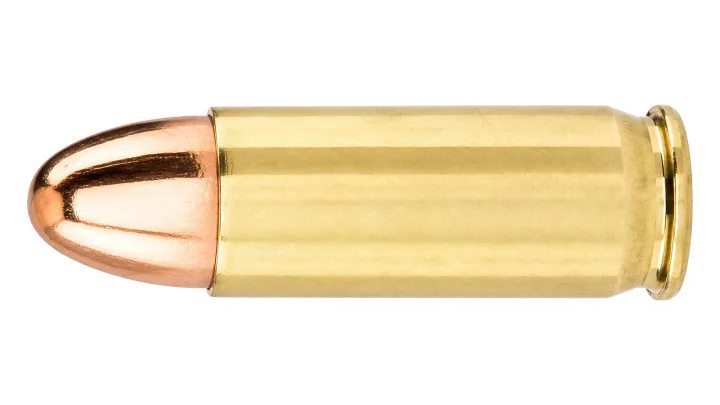
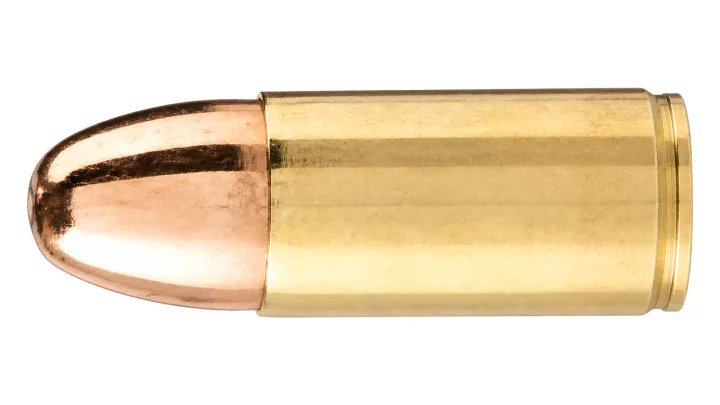
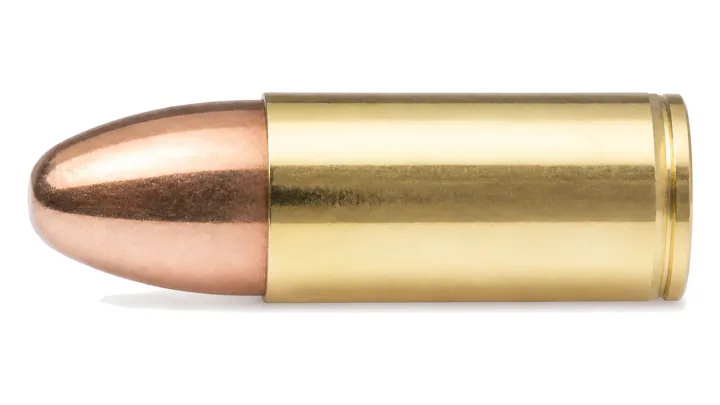
Full metal jacket 124 gr cartridge for law enforcement use, training and range competition, tested on NATO EPVAT barrels.
Average velocity
340 +/- 10 m/s at 16 m, 21 +/- 2 deg C, 200 mm NATO EPVAT proof barrel
Bullet type
FMJ, lead/antimony core
Bullet weight
8.00 +/- 0.10 g
Specifications →
How ball cartridges are specified
Tender annexes describe a ball cartridge by calibre and designation, then by the figures a buyer can verify on acceptance. Those figures vary from entry to entry and may include bullet mass in grams and grains, cartridge mass, average velocity measured at a stated distance from the muzzle, primer and propellant type, the operating temperature interval, and the reference standard where one applies. The packing line closes the entry, giving rounds per box or case and, where it is stated, the weight of that box.
Designation families and what varies by model
Two naming conventions run through the group. Military models carry their NATO or Eastern designation, among them M193, M855, SS 109, M80, M43, M67, M30 (J), M87 and M33, and most of those also carry an A-series index, such as A-008 for the M193, A-710 for the M855 and A-261 for the M33. Most of the pistol and revolver items are identified by that index alone, as with A-215, A-339 and A-079, while the two 9 x 19 mm entries carry no index at all. What changes between models is bullet construction and mass, the barrel twist the round is written for, the quoted standard, and the number of rounds per box.
Questions about this ammunition
How do the 5.56 x 45 mm M193 and M855 loadings differ?
The M193 carries a 3.56 g / 55 gr lead-antimony core bullet at 965 m/s and is written to MIL-C-9963 for barrels of 1:12 in twist. The M855 carries a 4 g / 62 gr steel core bullet at 920 m/s to MIL-C-63989, for 1:7 in to 1:9 in twist barrels.
Which reference standards do the pistol cartridges quote?
Most pistol and revolver entries quote C.I.P. and SAAMI, among them the .357 Magnum, .38 Special, .38 Super Auto, .40 S&W, 10 mm Auto and 9 x 18 mm Makarov. The 9 x 17 mm entry quotes SAAMI alone, the .45 Auto quotes MIL-C-1311E, and the 7.62 x 25 mm entry quotes no standard.