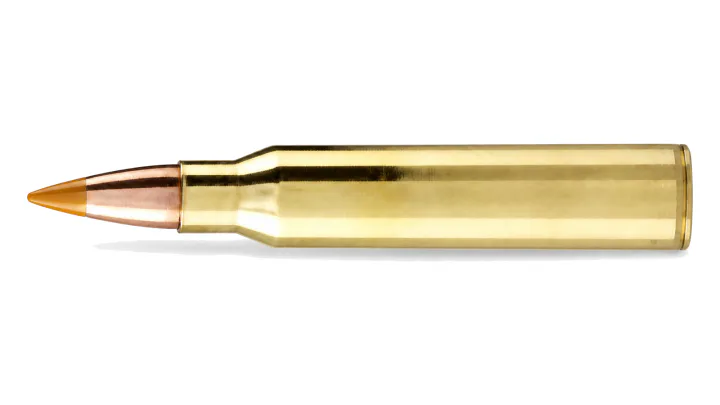
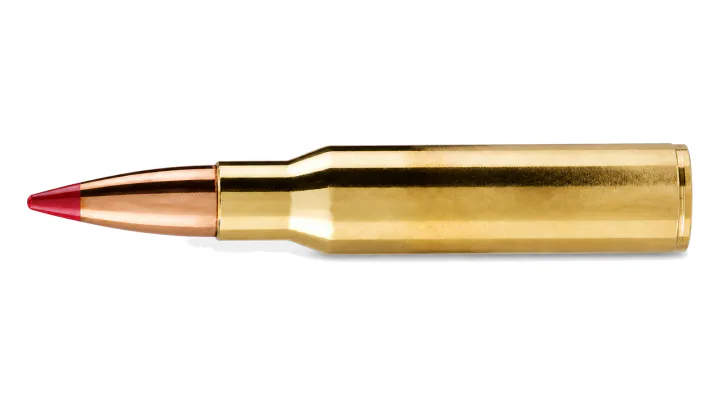
This group gathers the marked and cored cartridges of the register: tracer rounds, armour piercing incendiary rounds, the armour piercing incendiary tracer combination, and one belt linked four ball to one tracer. Fourteen line items run from the 5.56 x 45 mm L110 and M856 through the 7.62 x 51 mm M62 to the 12.7 x 99 mm M8, M17, M20, X6A, X6B and X6T, the 12.7 x 108 mm PZZ-B32 and BZT-44, and the 14.5 x 114 mm B32 and BZT. Every entry states a projectile mass, a velocity figure and a packing configuration.
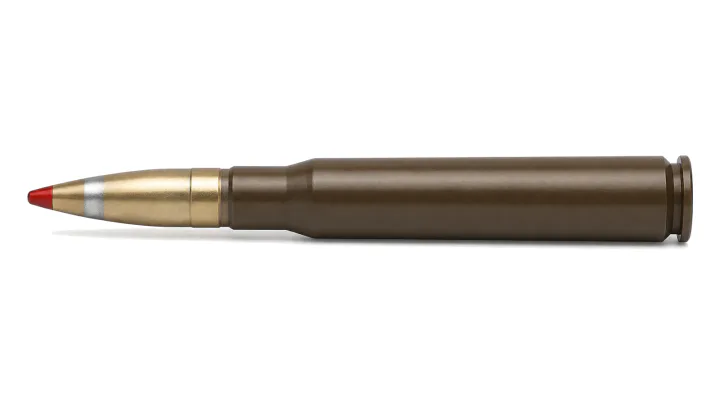
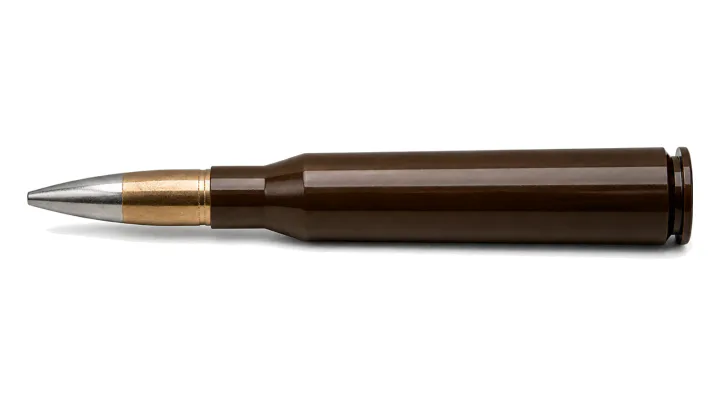
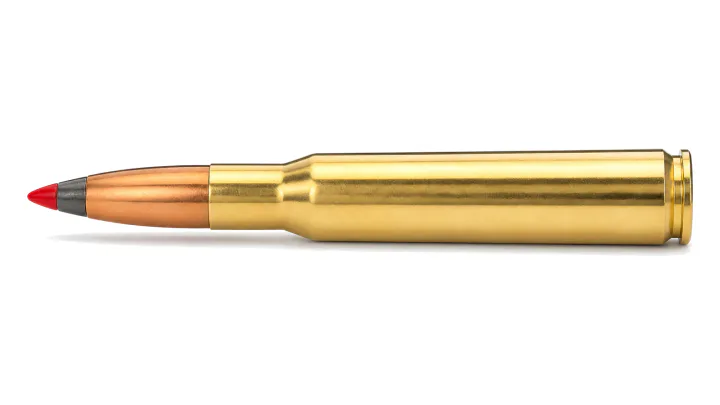
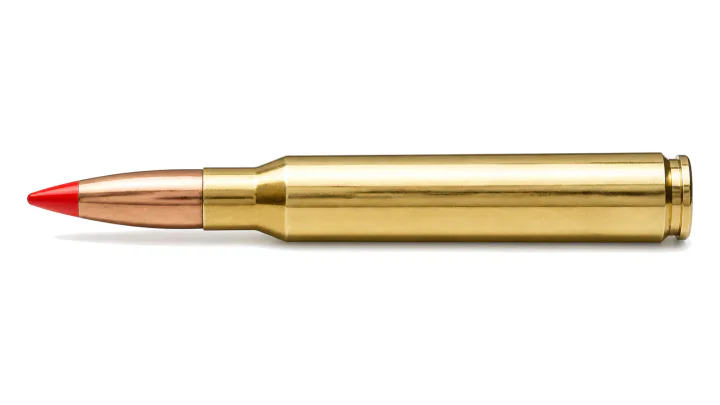
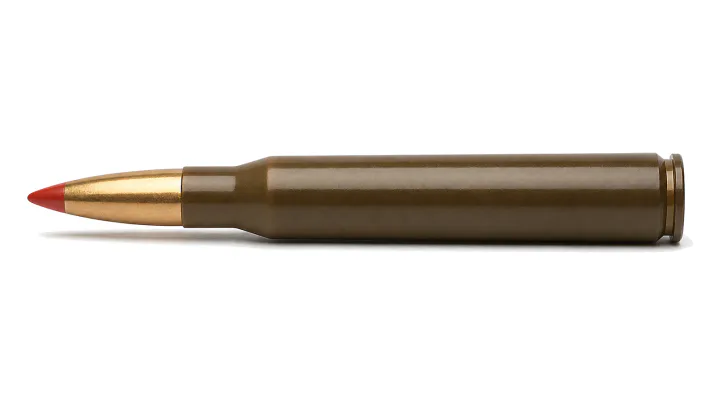
A .50 (12.7 x 99 mm) cartridge with a lacquered steel case and a 42 g armour piercing incendiary tracer bullet X6T, for use in all .50 calibre machine guns.
Calibre
.50 (12.7 x 99 mm)
Bullet
X6T, 42 g, tip painted red and silver
Bullet construction
Brass (CuZn10) plated steel jacket, hardened steel core, incendiary composition, tracer cup with tracer composition
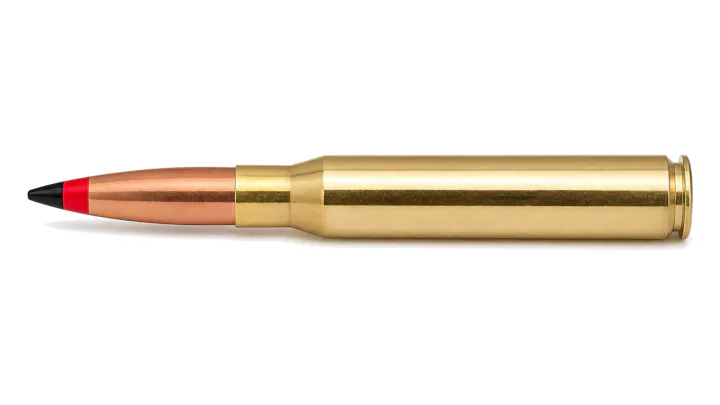
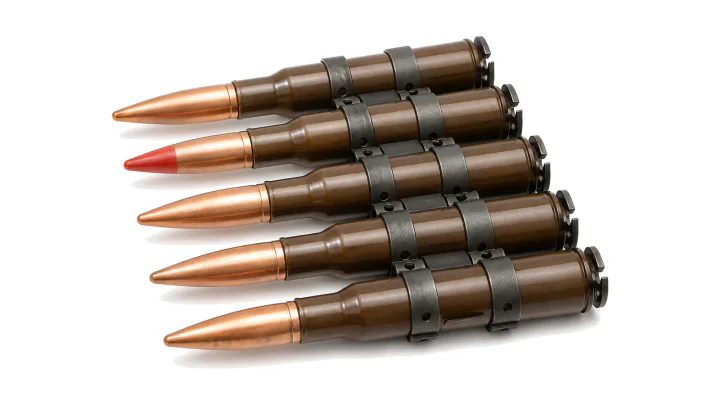
Belt of 12.7 x 99 mm steel-case cartridges linked four ball to one tracer for use against personnel from .50 calibre machine guns, with a bullet velocity of 886 m/s at 24 m.
Use
all .50 (12.7 x 99 mm) caliber machine guns, like .50 Z03 M.G., .50 Browning M2, Browning M85 etc.; used against personnel
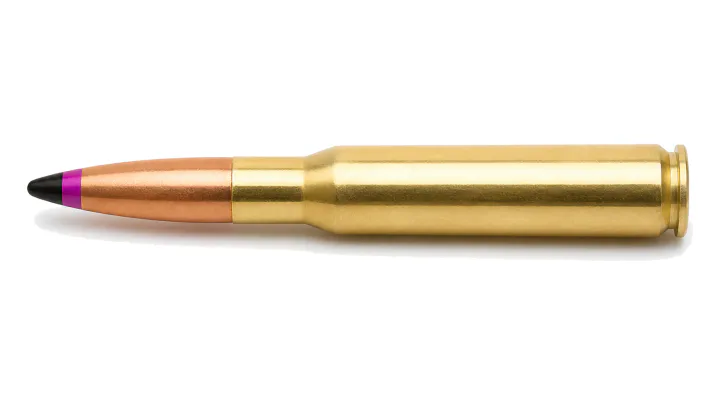
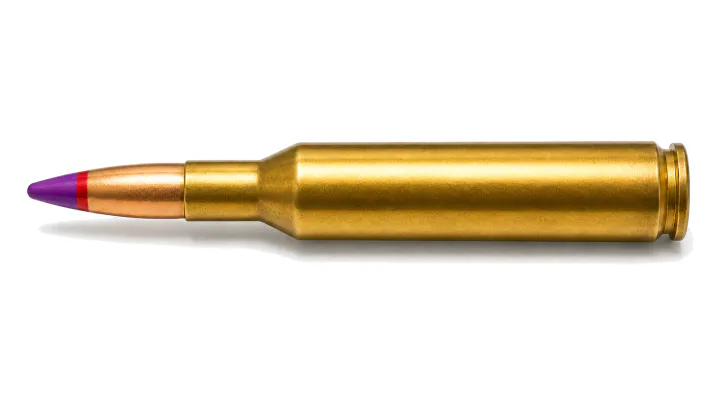
Tracer cartridge to STANAG 2310 and MIL-C-46281 for 7.62 x 51 mm calibre weapons.
Average velocity
815 +/- 15 m/s at 24 m (V24)
Bullet mass
9.4 g / 145 gr
Index
A-532 (Berdan) or A-412 (boxer)
Specifications →
How these rounds are specified in tender documents
A tender annex fixes the role first, then whichever acceptance figures the entry itself carries. Where a penetration figure is given it names a plate thickness, a range and a minimum percentage of rounds that must pass, such as 20 mm at 100 m for at least 90 per cent of the 12.7 x 108 mm PZZ-B32, while the 12.7 x 99 mm M8 and M20 records carry no such line. Trace is written either as an interval, as with the M17 and M20 at 91 to 1463 m, or as a percentage retained at one range, as with the X6A at 1500 m, and the 7.62 x 51 mm M62 states neither. Projectile mass and a velocity figure run through the group, while a dispersion value appears on part of it only, quoted as R50 or as an average mean radius.
Designation families and what varies by model
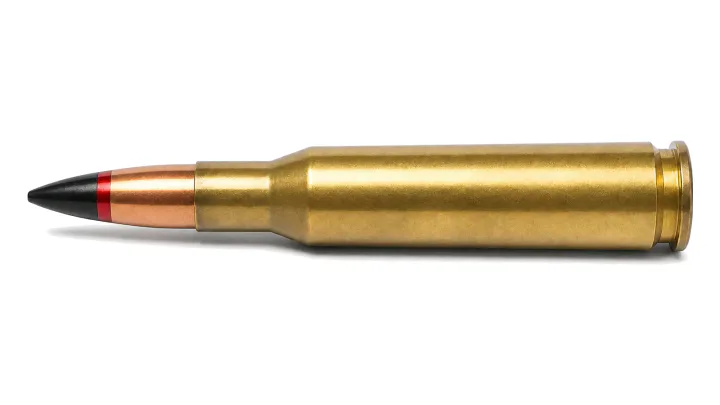
Three families sit in this group. Western service numbers cover the 5.56 x 45 mm L110 and M856, the 7.62 x 51 mm M62 and the 12.7 x 99 mm M8, M17 and M20. The X6 series, X6A, X6B and X6T, marks the steel case 12.7 x 99 mm cartridges. Eastern designations cover the 12.7 x 108 mm PZZ-B32 and BZT-44 and the 14.5 x 114 mm B32 and BZT. What changes between models is bullet mass and construction, the velocity figure and, where they are quoted, the trace and penetration values; a painted tip colour is named for part of the group only, such as the red and silver tip of the X6T and the black tip with a red band of the 14.5 x 114 mm B32.
Questions about this ammunition
How far do the tracers in this group burn?
Figures differ by model. The 5.56 x 45 mm M856 traces from 70 to 900 m and the L110 from 140 to 900 m. The 12.7 x 99 mm M17 and M20 trace from 91 to 1463 m, the 12.7 x 108 mm BZT-44 stays visible to at least 1000 m, and the 14.5 x 114 mm BZT holds at least 80 per cent trace capacity at 2000 m.
What penetration is quoted for the armour piercing entries?
Each entry carries its own figure. The 12.7 x 99 mm X6B is quoted at a minimum 90 per cent through 20 mm armour at 100 m, the 12.7 x 108 mm PZZ-B32 at the same plate and range, the BZT-44 at 15 mm, and the 14.5 x 114 mm B32 and BZT at a minimum 80 per cent through 20 mm armour at 100 m.