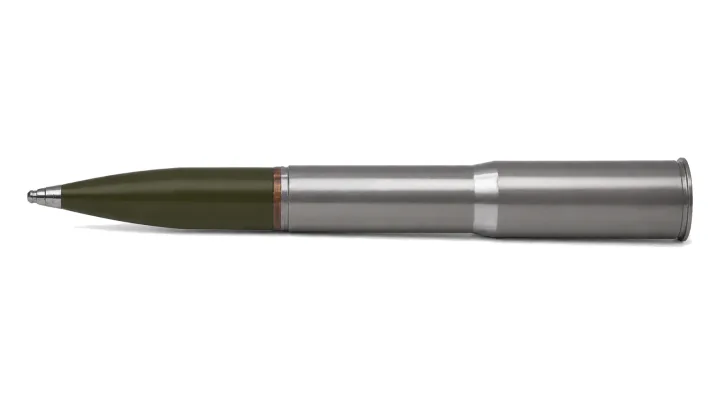
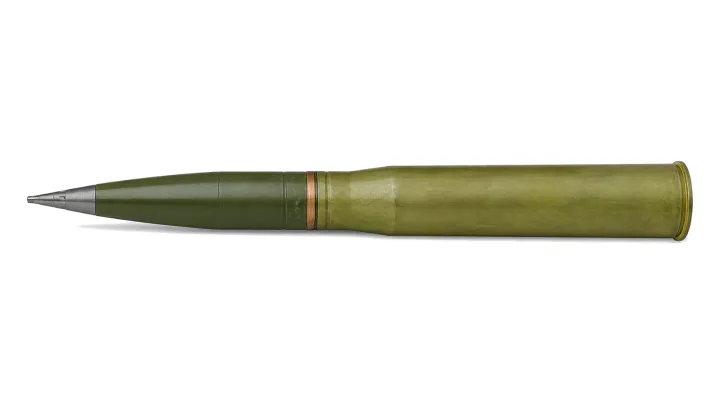
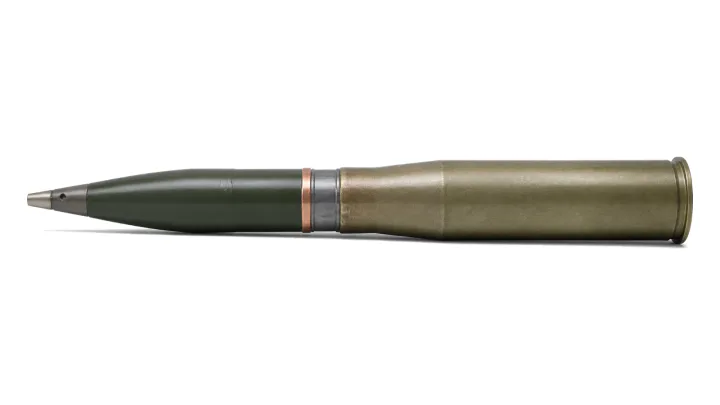
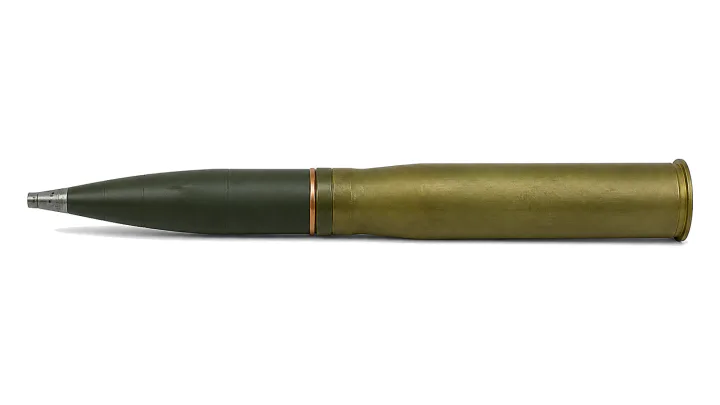
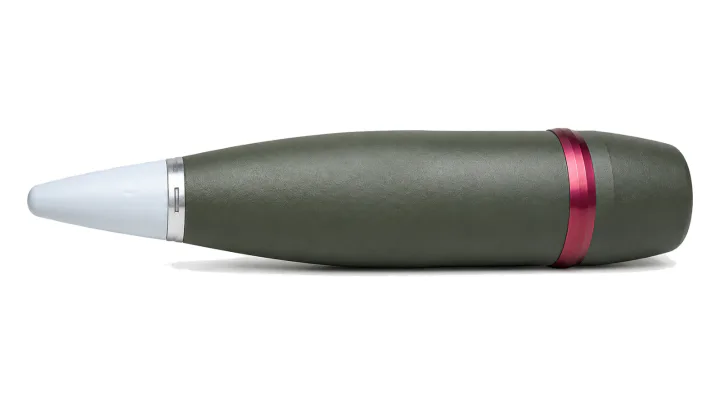
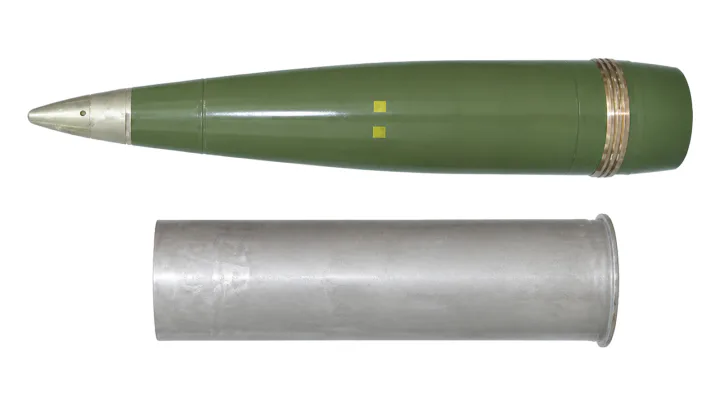
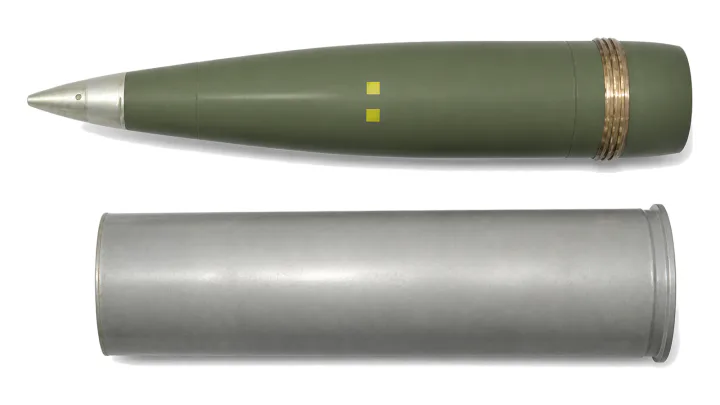
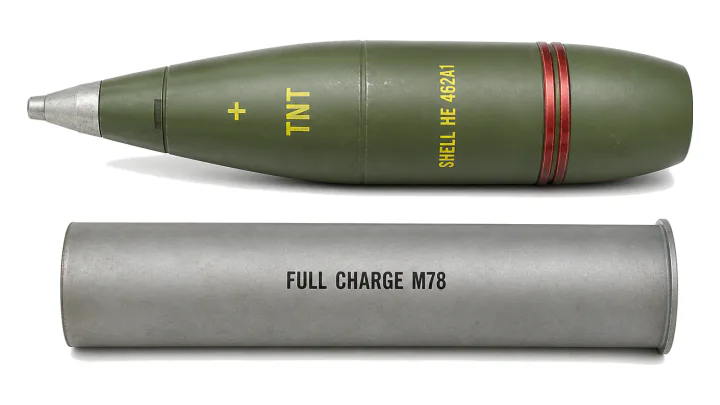
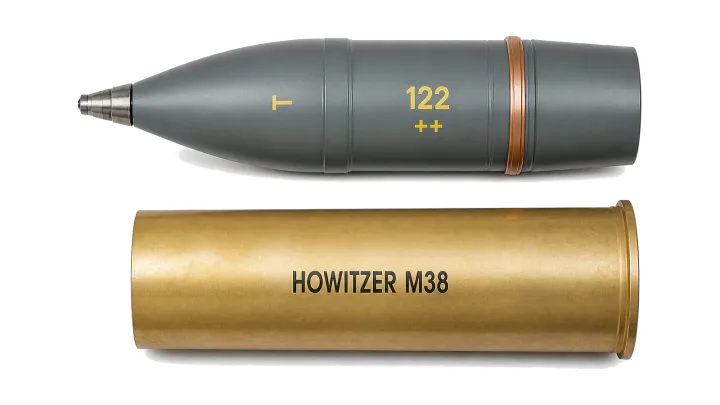
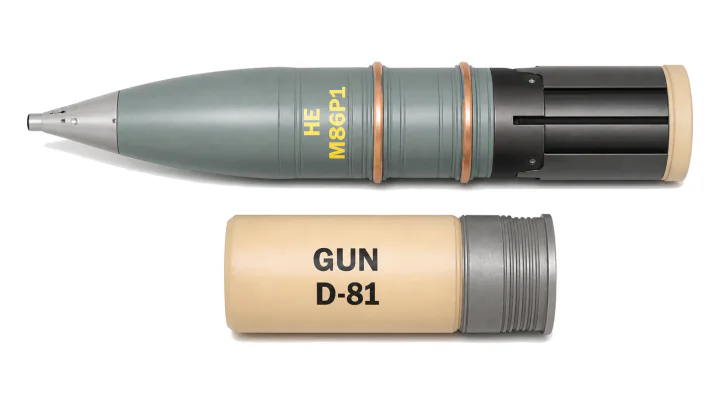
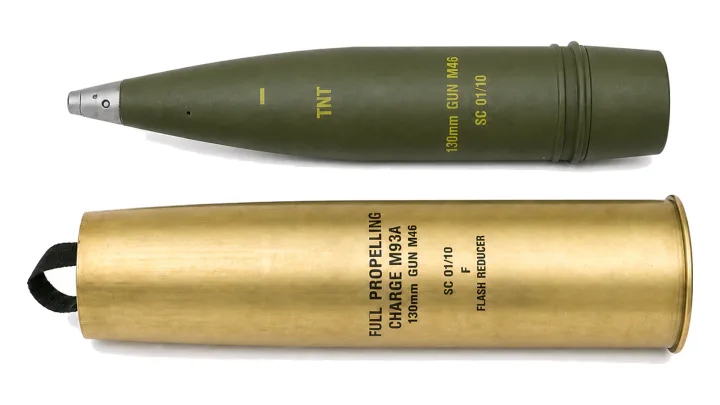
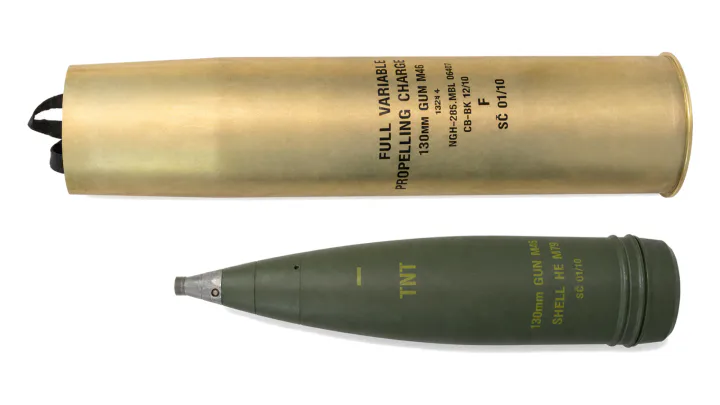
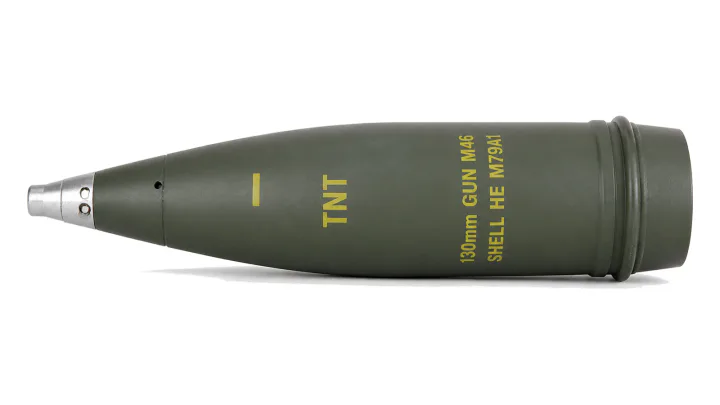
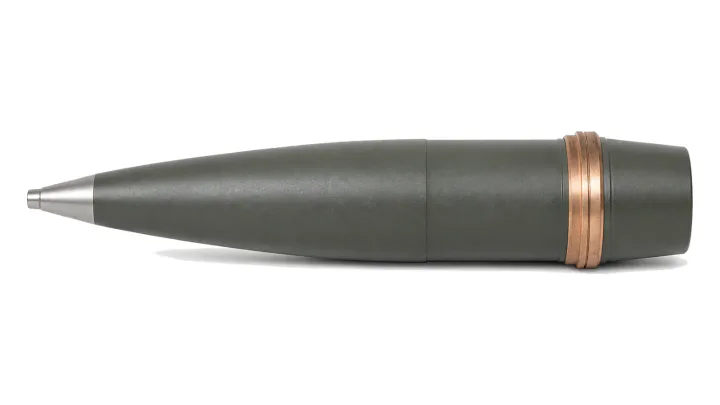
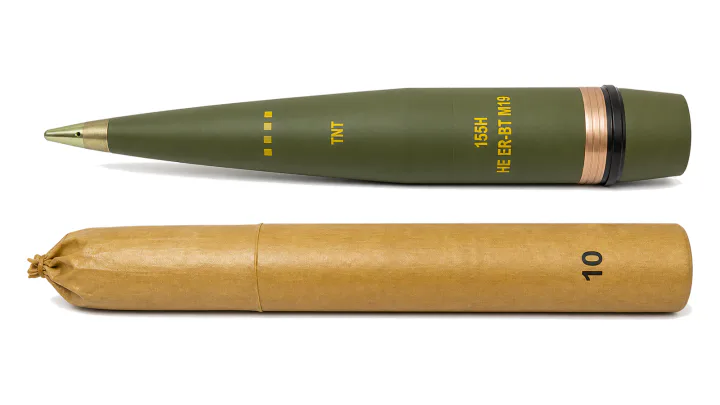
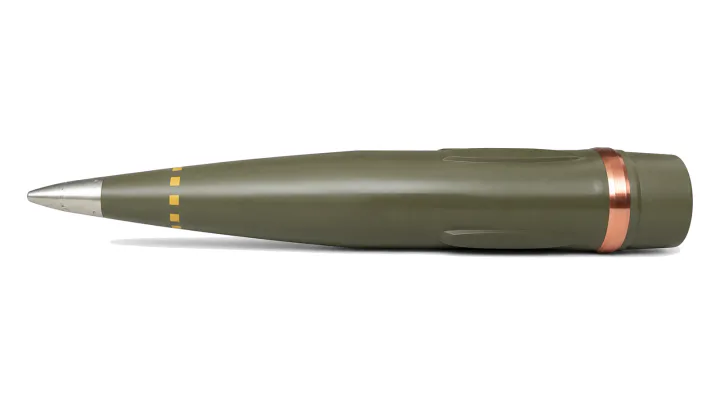
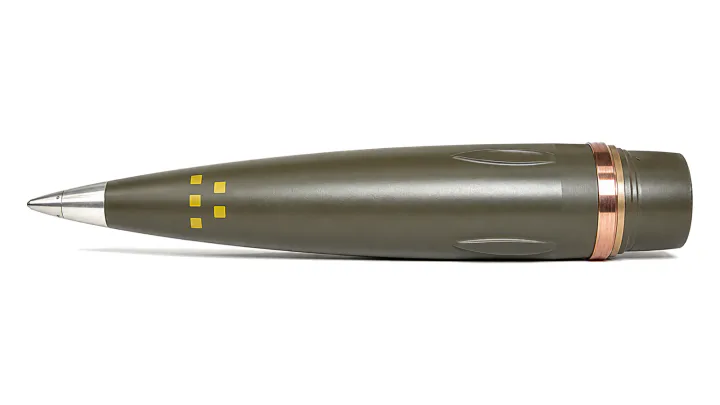
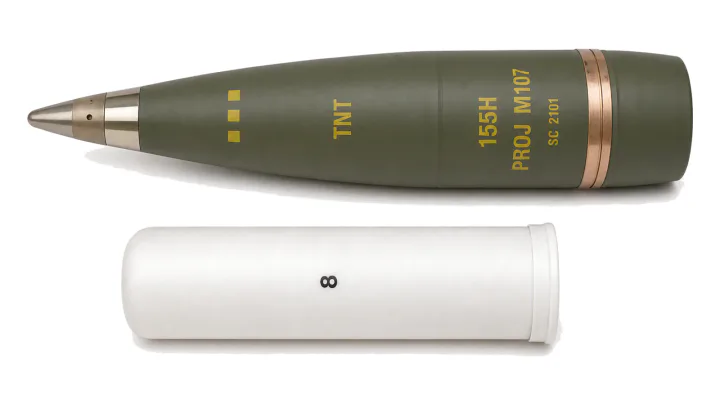
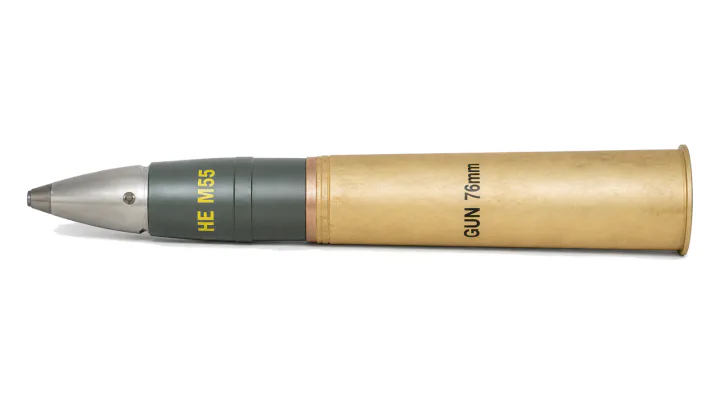
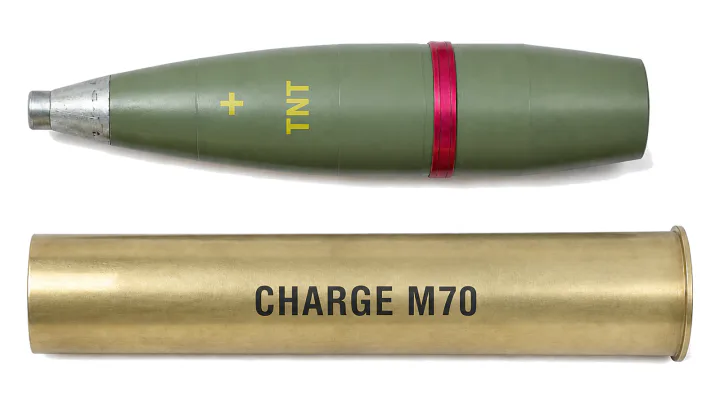
Thirty high-explosive line items span 76 mm gun rounds through to 155 mm gun-howitzer projectiles. The designation families are M55 and M70, M82 and the M63 series, M1 and M02, 462A1, TF-462A1 and M10, M86P1, M79 and M93, M88 and OF-540, and M03, M19, M101 and M107. Where the source states the loading, the 100 mm entries are fixed rounds and the 76 mm, 105 mm and larger entries semi-fixed or separate-loaded; nine records are listed as projectiles with no loading stated. Filling is TNT in most records, with RDX and aluminised RDX where the source records them.
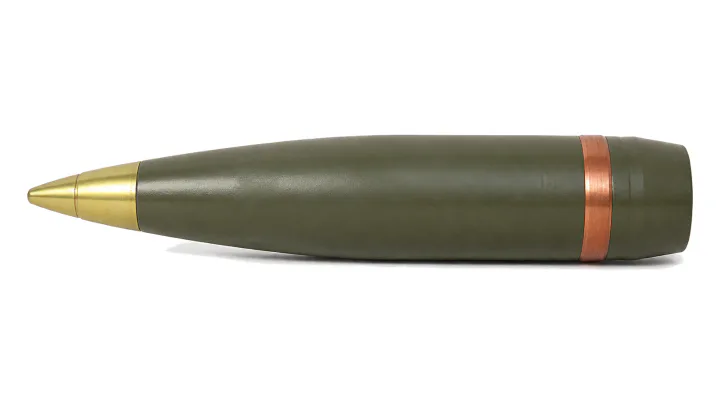
A fixed 100 mm round for the 100 mm antitank guns T-12 and MT-12, consisting of an assembled steel cartridge case with full propellant charge and a TNT-filled high-explosive projectile M82 fitted with a UTIU M85P1 fuze and a No12 tracer, intended for direct and indirect fire against personnel, light fortifications and unarmoured or lightly armoured vehicles.
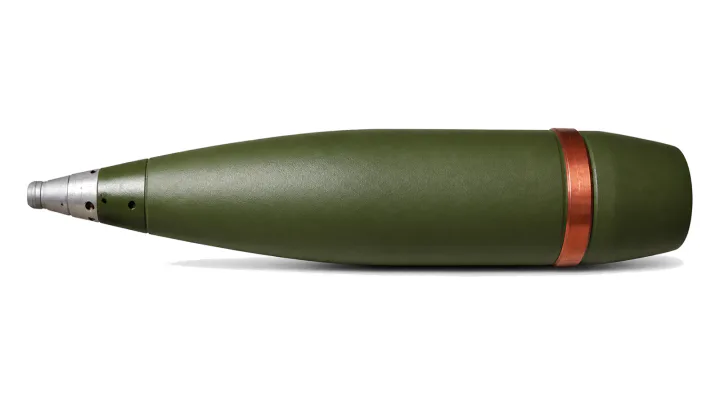
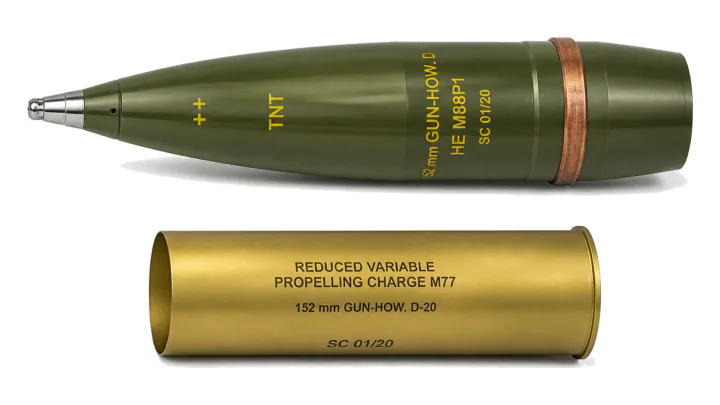
A separately loaded 152 mm round combining a TNT-filled high-explosive projectile M88 with a reduced variable propellant charge M77, fired from the 152 mm gun-howitzer D-20 and the 152 mm gun-howitzer M1937 against personnel, light fortifications and unarmoured or lightly armoured vehicles.
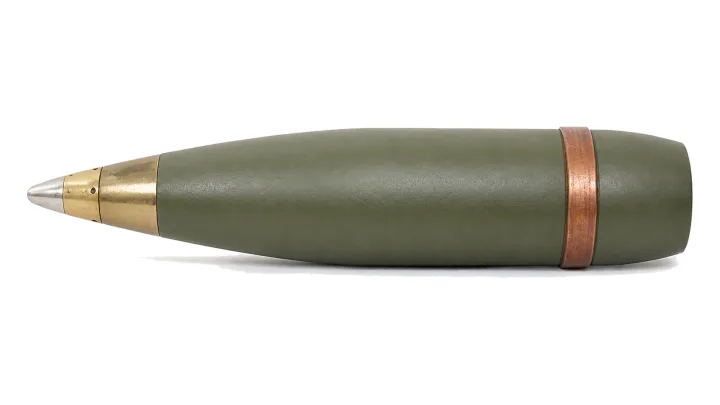
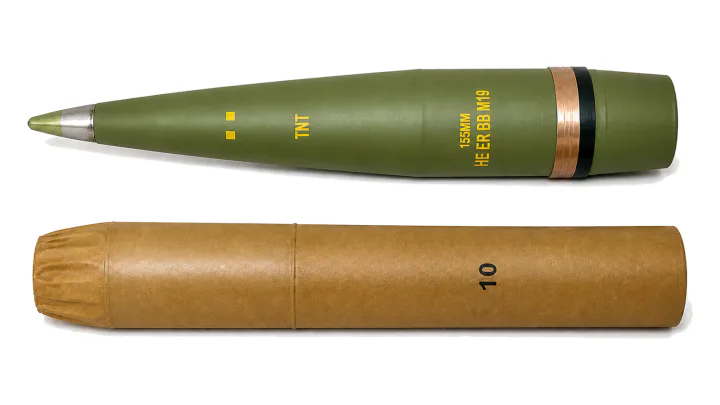
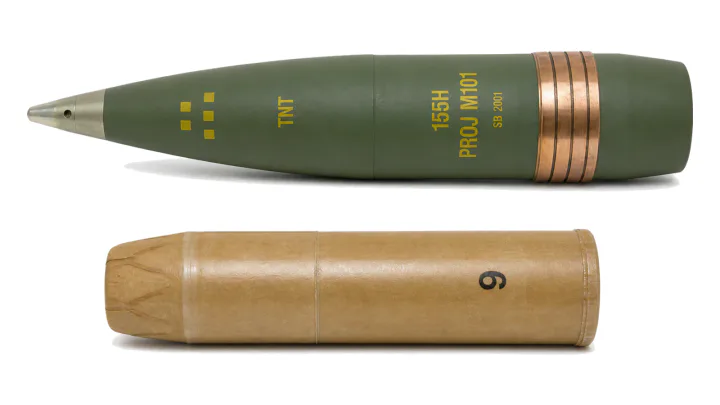
A separate-loaded 155 mm round pairing a high-explosive projectile M101 with an MC zone 9 propellant charge, intended for the destruction of personnel, light fortifications and unarmoured or lightly armoured vehicles.
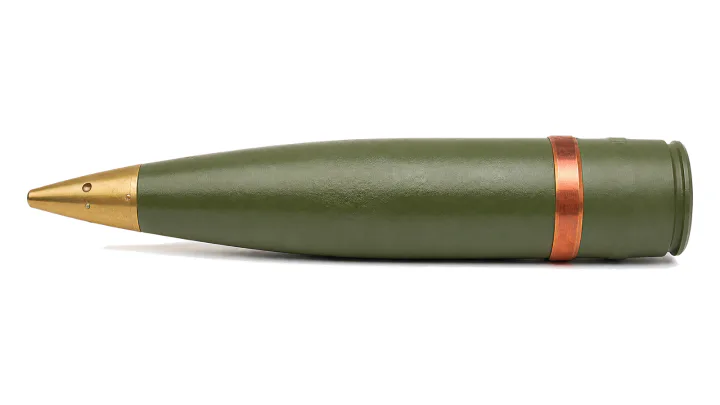
Separate-loaded 76 mm HE M70 round with TNT-filled projectile for the M48B1 gun, with 398 m/s muzzle velocity and 8750 m maximum range.
Maximum range
8750 m
Muzzle velocity
398 m/s
Fuze
UTI, M68 P1
Specifications →
How high-explosive natures are specified in tender documents
A tender annex identifies a high-explosive item by calibre and projectile designation, then by the propelling charge or charge zone it is paired with. The figures that follow are usually projectile mass, explosive charge mass, muzzle velocity, maximum range, mean maximum pressure of powder gases and the fuze designation. Several records add the cartridge case, the operating temperature band and the number of rounds per wooden case.
Designation families and what varies by model
The families run M55 and M70 at 76 mm, M82 and the M63, M63P1 and M63P2 series at 100 mm, M1 and M02 at 105 mm, 462A1, TF-462A1 and M10 at 122 mm, M86P1 at 125 mm, M79, M79 A1 and M93 at 130 mm, M88 and OF-540 at 152 mm, and M03, M19, M88, M101 and M107 at 155 mm. Suffixes mark the change: P1 and P2 alter the filling, while ER, BB, HB and BT mark an altered ballistic body.
Questions about this equipment
What figures does each high-explosive record state?
Most records give projectile mass, explosive charge mass, muzzle velocity, maximum range and the fuze designation, together with the weapon the source names. The extended-range 122 mm entries state charge and cartridge case data without a projectile mass, so each record should be read on its own terms.
Why does one designation appear on several line items?
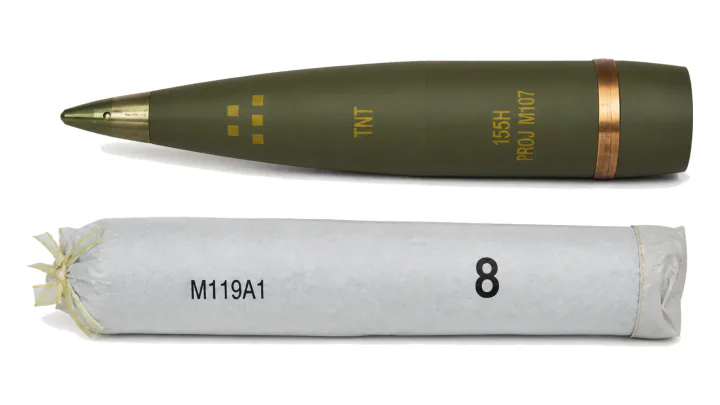
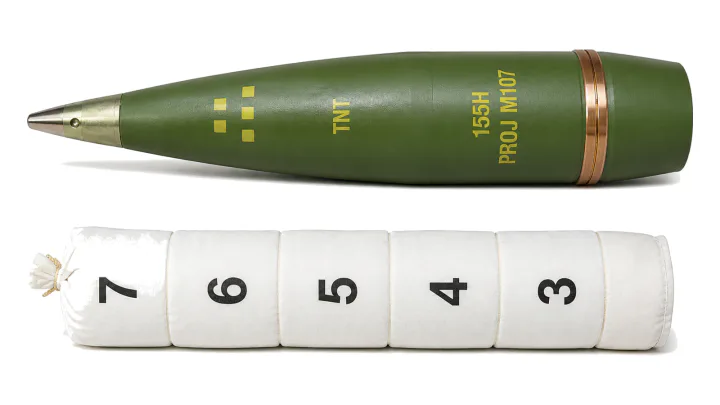
The source lists a projectile together with the propelling charge paired with it. M107 appears with the M4A2 charge, with M119A1 and with an MC zone 8 charge, and each pairing carries its own muzzle velocity and maximum range, with a mean maximum pressure quoted on the M4A2 and M119A1 records, so they are catalogued separately.