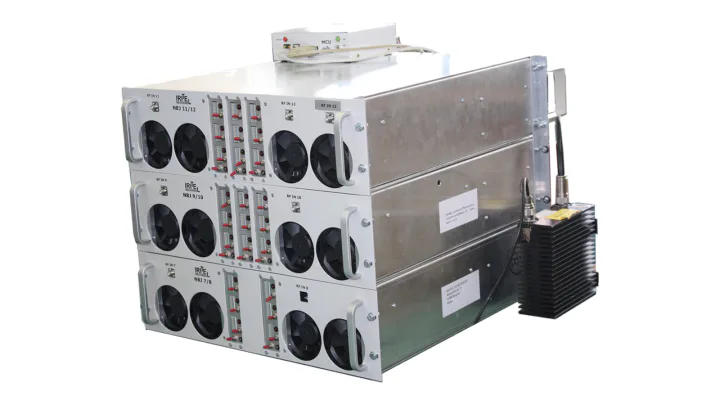
Radio-frequency jammers deny the trigger signal to radio-controlled improvised explosive devices and stop unauthorised cellular use around a protected vehicle. Two rack-mounted systems cover the wideband role: the SPJ-1 spans 20 MHz to 6 GHz in eight bands with up to 310 W and a range of about 100 m, and the modular WRJ 2004 reaches about 200 m with up to 1100 W across up to 12 subbands. The compact VPJ-1, VPJ-2 and VPJ-3 units mount in a vehicle and jam three bands independently within 5 to 10 m, covering 800 to 2500 MHz, 100 to 800 MHz or 100 to 2500 MHz respectively.
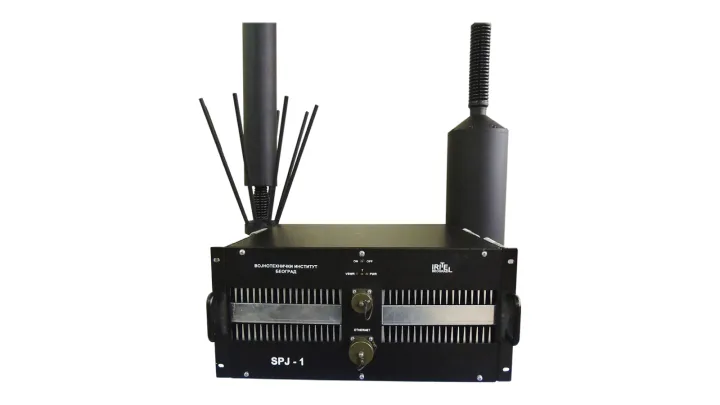
A 6U rack-mounted wideband self-protection jammer against radio-controlled improvised explosive devices, covering 20 MHz to 6 GHz in eight bands with up to 310 W total output and fed by two external multiport omnidirectional antennas.
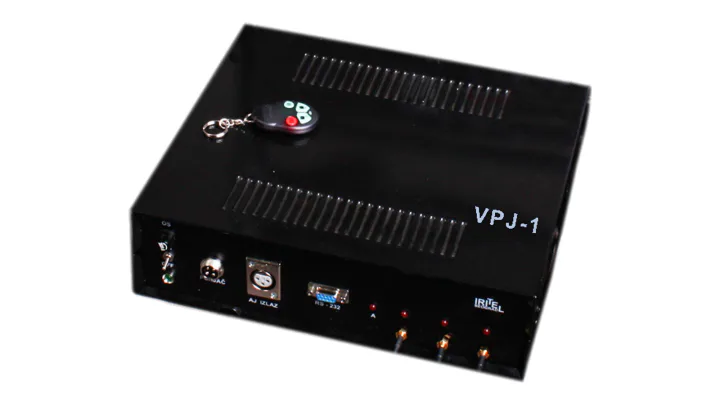
A vehicle-mounted jamming unit for protection against radio-controlled improvised explosive devices and unauthorised use of cellular communication devices, blocking up to three frequency bands simultaneously and independently within 5 to 10 metres of the vehicle.
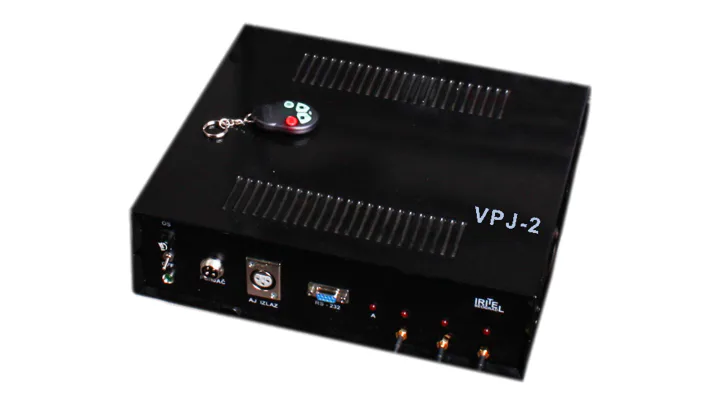
A vehicle-mounted jamming unit for protection against radio-controlled improvised explosive devices and unauthorised use of cellular communication devices, blocking up to three frequency bands between 100 and 800 MHz simultaneously and independently within a 5-10 metre radius of the vehicle.
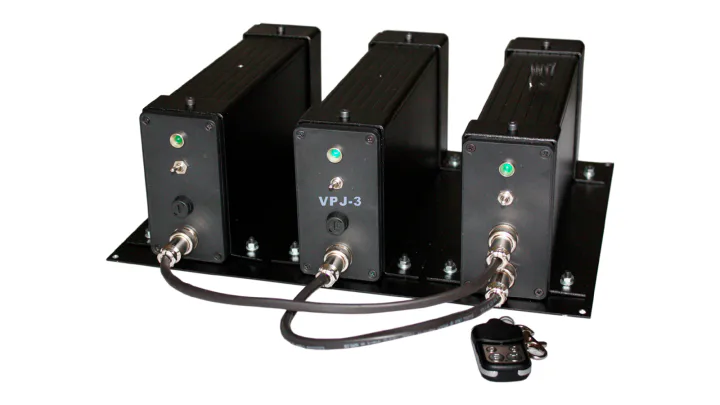
A vehicle-mounted jamming unit for protection against radio-controlled improvised explosive devices and unauthorised use of cellular communication devices, covering three bands from 100 MHz to 2500 MHz with three omnidirectional antennas and jamming within a 5-10 metre radius of the vehicle.
A rack-mounted modular wideband radio jammer against radio-controlled improvised explosive devices, covering up to 12 subbands with separate exciter-amplifier modules and used for convoy and VIP protection, anti-terror units, bomb squads and military bases.
Jamming range
up to ~200 m
Frequency range
20 MHz to 3.6 GHz, separated in multiple subranges
Jamming signal type
wideband noise, FM sweep, multicarrier
Specifications →
Frequency coverage and output power
A jammer specification begins with the bands to be denied. The SPJ-1 covers 20 MHz to 6 GHz in eight bands at 10 to 100 W each, while the WRJ 2004 covers 20 MHz to 3.6 GHz in up to 12 subbands, each covered by its own exciter-amplifier module at 30 to 200 W; both programme their bands as required and protect the output amplifiers against VSWR, temperature and input-power faults. The vehicle units instead split coverage into three fixed bands at 27 to 30 dBm each: the VPJ-1 for 800 to 2500 MHz cellular ranges, the VPJ-2 for 100 to 800 MHz and the VPJ-3 for 100 to 2500 MHz.
Installation, power and control
The SPJ-1 is a 45 kg amortised 6U 19-inch rack on 24 Vdc at 51 A with two omnidirectional antennas, programmed by USB or LAN and controlled by push buttons or an Ethernet application for band, power and bandwidth control and monitoring. The WRJ 2004 separates power-supply and exciter-amplifier racks and draws 24 Vdc at 200 A, with 12 Vdc or 220 Vac options. The VPJ units draw 40 VA from 12 or 24 Vdc (VPJ-3: 9 to 36 Vdc), use three PCB or omni antennas on SMA connectors and offer optional remote control.
Questions about this equipment
What is the difference between the VPJ-1, VPJ-2 and VPJ-3?
All three are vehicle-mounted units with a digital synthesiser, fast chirp sweep signal and a 5 to 10 m effective radius. They differ in band plan: the VPJ-1 covers 800 to 2500 MHz in three bands, the VPJ-2 covers 100 to 800 MHz, and the VPJ-3 covers 100 to 2500 MHz with 30 dBm per band and omnidirectional antennas.
How far do the rack-mounted RCIED jammers reach?
The SPJ-1 is rated to about 100 m, a figure its record qualifies as depending on terrain configuration, with up to 310 W across eight bands. The WRJ 2004 is rated to about 200 m with up to 1100 W across up to 12 subbands, focusing on 150 MHz, 450 MHz, GSM900, GSM1800 and UMTS, with no such condition stated. The vehicle-mounted VPJ units instead give 5 to 10 m depending on the signal strength at the site.