Projectile and bomb fuzes - electronic time, proximity, multifunction and impact fuzes
This group holds the nine line items the source records simply as fuzes. UB M16 is a proximity fuze working on the Doppler effect and UMF M16 a multifunctional fuze combining proximity, timing and superquick impact. UTE M10A1, UTE M03 without booster and UTE M10 without booster are electronic time fuzes with setting ranges recorded between 3 and 200 s. UTIU M72B2 and UTIU M72B3 are mechanical point-detonating nose fuzes of 0.42 kg. AUFK M-91 and the vAF-M17 with its vFI-M17 initiator are bomb fuzes. Where a mass is stated it runs from 0.42 kg to about 2 kg.
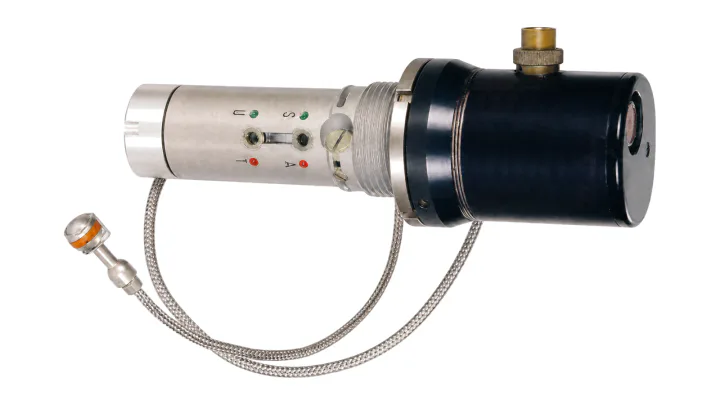
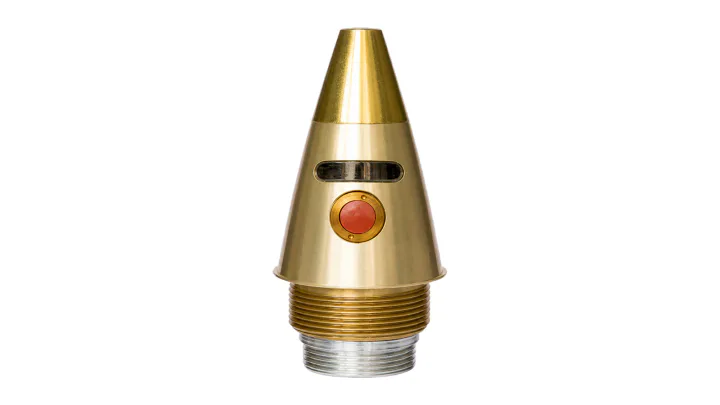
An impact, inertia-type electronic-mechanical fuze for high-explosive aircraft bombs with or without a drag chute, offering super-quick (T) and delay (U) action selectable by a manual mode selector and fitted with an armed/unarmed status indicator.
Type
Impact, inertia-type electronic-mechanical fuze with super-quick (T) and delay (U) action adjustable by mode selector
Purpose
High-explosive aircraft bomb with or without drag chute
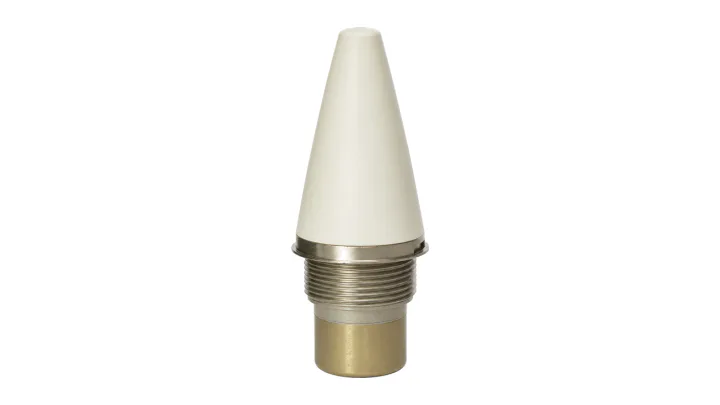
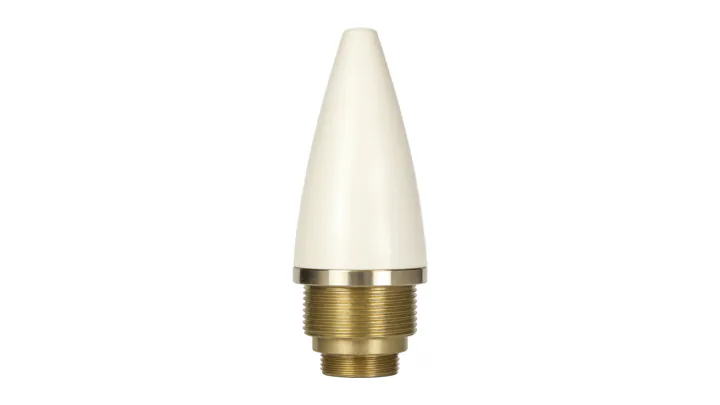
Nose-mounted electronic proximity fuze with secondary contact-superquick action for 105 mm to 155 mm high-explosive artillery projectiles, working on the Doppler effect of radio waves with selectable sensitivity levels and a blocking function over the last 2.5 seconds of flight.
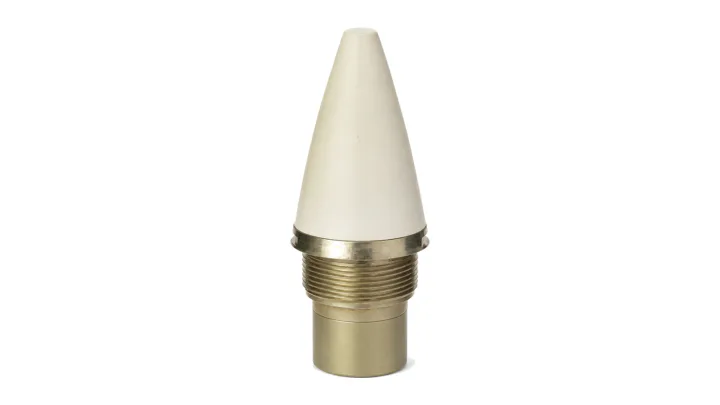
Nose-mounted electronic time fuze with secondary contact action for timed artillery projectiles of all calibres from 76 to 203 mm with a 2"-12UNS-1A thread, set wirelessly with a setter that also selects the function.
Nose-mounted multifunctional electronic fuze for 105 mm to 155 mm high-explosive artillery projectiles, offering proximity, timing and superquick impact action selected with a setter, with a blocking function active over the last 2.5 seconds of flight.
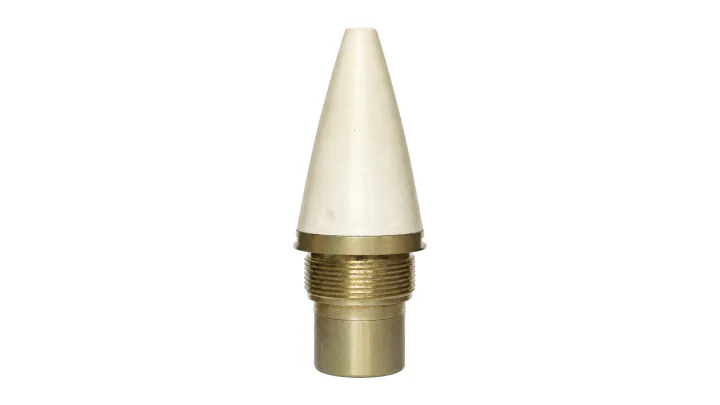
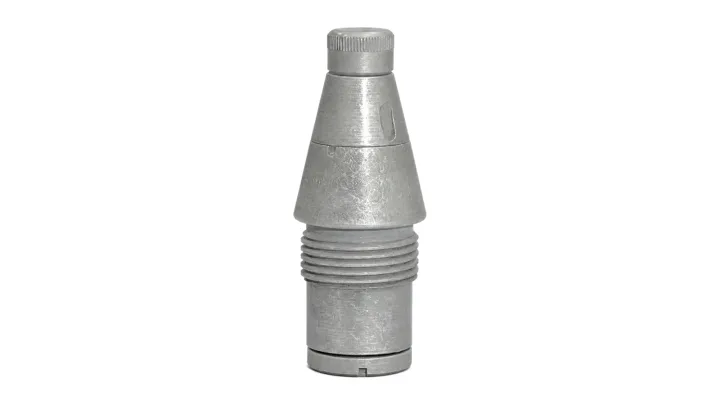
Mechanical point-detonating nose fuze with superquick, inertia and delay action, settable to superquick or delay, for assembling HE projectiles of 85 mm, 100 mm, 122 mm, 130 mm and 152 mm for guns and howitzers, with extended muzzle safety of min 50 m and arming at max 300 m.
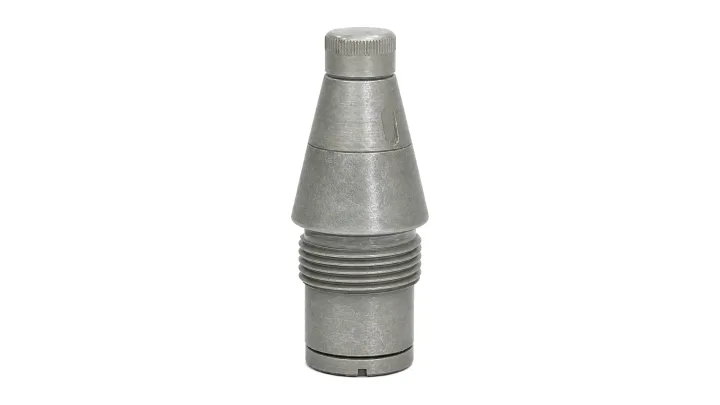
Mechanical point-detonating nose fuze with superquick, inertia and delay action, settable to superquick or delay, for assembling HE projectiles with and without base-bleed in calibres 85 mm, 100 mm, 122 mm, 130 mm and 152 mm for guns and howitzers.
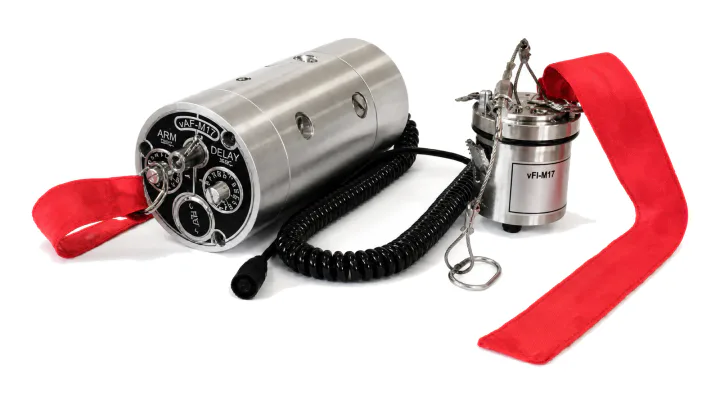
An inertial electro-mechanical aerial bomb fuze with a microcontroller and an interrupted explosive chain that keeps the detonator physically isolated until arming, paired with a top-mounted initiator, offering arming delays from 2 to 25 seconds and detonation delays from instantaneous to 1000 seconds.
Weight
Fuze: ~2 kg; Initiator: ~0.4 kg
Fuze type
Inertial electro-mechanical fuze with microcontroller and interrupted explosive chain
Bomb compatibility
MK-82, MK-84 and BLU-109
Specifications →
How these entries are specified in a tender annex
Where the source gives no narrower type label, the annex still records the action, the projectiles or bombs named as compatible, the connecting thread and the arming window. These nine entries follow that pattern: proximity, timing, multifunction, superquick impact or inertial electro-mechanical for the action; 105 to 155 mm projectiles, 76 to 203 mm projectiles or MK-82, MK-84 and BLU-109 bombs for compatibility; and acceleration bands such as 20000 to 250000 m/s2.
Designation families and what varies by model
UB, UMF and UTE are the electronic families, several of them recorded on a 2 in - 12 UNS-1A thread with a total fuze height of at most 151.6 mm. UTIU M72B2 and M72B3 are the mechanical pair, separated by muzzle safety of minimum 50 m against minimum 10 m and by arming within 300 m against 200 m. AUFK M-91 and vAF-M17 are the bomb fuzes, the first recording a 22 ± 4 s delayed action, the second arming delays of 2 to 25 s.
Questions about this equipment
Which of these fuzes are set by a separate device?
UTE M10A1 records wireless setting from 3.2 to 199.9 s with a setter that also selects the function, UMF M16 records function selection with a setter, and UTE M10 without booster records a 3 to 200 s range set with a setter. The vAF-M17 instead records fixed arming and detonation delay steps.
What packaging and transport data is listed?
UTE M03 without booster and UTE M10 without booster both record 8 fuzes in a metal box of 305.6 x 154.8 x 190.5 mm and 80 boxes per pallet, at 8 kg and 10 kg gross per box respectively, classified IMO Class 1.4D, UN No. 0410. The other entries in this group carry no packaging figures.